About This Article
Zoom Baby has over 20 years’ experience providing fertility testing products and clear guidance to people trying to conceive. This article looks at the relationship between exercise, body weight and fertility, including why balance is important when planning your exercise routine.
Published: 1 February 2025 | Last Updated: 31 August 2026 | By Anthony Cunningham
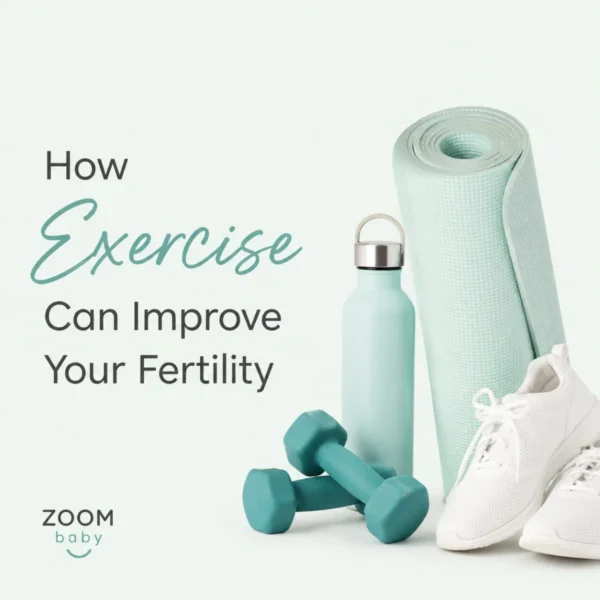
The first thought for many women who decide to have a baby is to start an exercise routine and eat a healthy diet. However, before you start increasing your current exercise routine, or begin a new workout plan, take a moment to consider this: very high levels of exercise can negatively affect fertility, particularly when combined with inadequate energy intake or low body weight. Regular, light exercise can help maintain a healthy body, while excessive exercise may disrupt the menstrual cycle and affect ovulation. It’s all about balance! For general health while trying to conceive, regular moderate physical activity and maintaining a healthy weight are sensible goals.
Contents
- Excessive Exercising and Fertility
- Maintaining a Good Weight for Fertility
- How Exercising Maintains a Healthy Body
- Don’t Have a Regular Exercise Routine?
- Start Now! Don’t Wait until You’re Pregnant
- Set Realistic Limits
- Exercises that are Fertility-Friendly
- Try a Variety of Activities
Excessive Exercising and Fertility
Regular, moderate exercise can be a healthy part of preparing for pregnancy, but very high levels of exercise can affect fertility in some people. So, if we know that excessive exercising can affect fertility, the question arises: “What is excessive exercise”? The answer will vary from person to person and depends on factors including training intensity, nutrition and body weight. Very high levels of exercise, particularly when combined with inadequate energy intake or low body weight, can disrupt the hormonal signals involved in ovulation and may lead to irregular or absent periods.
Maintaining a Good Weight for Fertility
Being significantly above or below a healthy weight can affect fertility. That’s why it’s important that you understand your BMI (body mass index) and work out an exercise plan to help your body achieve a healthy state for pregnancy. Being above or under a healthy weight can disrupt ovulation and hormone production in your body, making it harder to conceive. NICE advises that a BMI of 30 or above may be associated with taking longer to conceive, while people with a BMI below 18.5 who have irregular or absent periods may improve their chance of conception by reaching a healthier weight. If you’re unsure about your weight or BMI, please don’t hesitate to speak to your general practitioner. Your doctor can advise you about appropriate exercise and dietary changes to help you reach a healthy weight when trying to conceive.
How Exercising Maintains a Healthy Body
When it comes to fertility, moderate exercise can be very helpful in a number of ways. To start with, the right exercise programme can improve your stamina and strength, which may also help prepare you for the physical demands of pregnancy. Exercise is also beneficial for cardiovascular health, muscle strength, stress management and your overall general health.
Don’t Have a Regular Exercise Routine?
If you don’t exercise on a regular basis, or perhaps you’ve never exercised at all, it’s never too late to start! And it’s all so easy! Start with a simple exercise like walking, swimming, cycling, dancing, yoga, tai chi, or Pilates, and make sure you include some stretching. This will give you a base so that you can gradually increase the time and intensity of your exercise regime. Your aim should be to exercise for five days a week for 30 minutes at a time; or alternatively, an hour-long workout three times a week. Because we understand that everyone is different, if you are unsure how much exercise is appropriate for you, speak to your GP or a suitably qualified fitness professional.
Start Now! Don’t Wait until You’re Pregnant
The reason you should start your fitness programme now is that establishing healthy habits before pregnancy can help you maintain them once you conceive. Keep in mind that your health before and during pregnancy is important, so beginning an appropriate exercise programme and a good eating plan before conception can be beneficial. And, by starting now you’ll find that your physical activity will become a habit, and you may find it easier to continue exercising while you’re pregnant and after the birth of your baby.
Set Realistic Limits
If you’re an athlete and you love working out, very high levels of exercise may need to be moderated if they are affecting your menstrual cycle. If you train very intensively and have irregular or absent periods, consider reducing your training load and speak to your GP or another healthcare professional. Rest and adequate nutrition are also important parts of a balanced training routine.
Exercises that are Fertility-Friendly
Fortunately, there are a few different types of moderate exercise that can help you stay healthy while trying to conceive. A moderate cardio regime that consists of swimming, walking, aerobic classes, or jogging can get your blood pumping without requiring extreme exertion. When it comes to building core strength and reducing stress, Pilates and yoga classes are also popular choices. Another great way of building stamina and strength is to lift weights a couple of times a week. Basically, you’re looking for different types of exercises where you’re not overexerted, but just a little out of breath. However, always listen to your body, and don’t overwork your body.
Try a Variety of Activities
The only way to maintain any exercise programme is to indulge in activities that you enjoy, so make sure you try a variety of activities. Maybe it’s pouring with rain so you can’t go for a walk outside, but you can certainly go to that Zumba class. Swimming is typically a favourite of pregnant women because it’s low impact and you get to enjoy that wonderful weightless feeling, particularly during the latter months of pregnancy. Of course, maintaining an appropriate exercise programme before, during, and after pregnancy may also help with general fitness and wellbeing.
Other activities you can try include prenatal yoga, which can provide many benefits such as reduced stress, improved flexibility and balance, and help with breathing techniques during labour. If you prefer something more low-key, consider doing some prenatal Pilates. This low-impact exercise can help strengthen your core, pelvic floor, and back muscles.
Walking is another great option, and it’s something you can do almost anywhere. Take a stroll around your neighbourhood or head to a nearby park. If you have a dog, take them along too for some extra company and motivation.
Whatever activity you choose, just make sure you’re comfortable and not overexerting yourself. Listen to your body and don’t push yourself too hard. Remember, the goal is to stay healthy and active, not to become a fitness superstar.
In addition to trying different activities, it’s also important to mix up your routine. Trying different activities can keep your exercise routine interesting and help you maintain it over the longer term.
By trying a variety of activities and mixing up your routine, you’ll have a much better chance of sticking with your exercise programme throughout your pregnancy and beyond. And ultimately, you’ll be supporting your general health and fitness by staying healthy and active.
About the Author
Anthony Cunningham, BA (Hons), MA, is a UK-based fertility testing expert and editor with over 20 years’ experience running Zoom Baby, a trusted source for accurate pregnancy, ovulation and fertility tests and testing guidance. He creates clear, evidence-based articles using NHS guidance, professional fertility resources, and conception planning best practices. Where possible, content is reviewed by fertility specialists and healthcare professionals to enhance accuracy and reliability, helping readers make informed testing decisions.