About This Article
Zoom Baby has supplied pregnancy, ovulation and fertility tests to UK customers for nearly 20 years. This guide draws on our experience helping thousands of people understand pregnancy test timing, hCG hormone detection, and early pregnancy testing. Always consult healthcare professionals for medical advice regarding conception and pregnancy.
Published: December 26, 2017 | Last Updated: January 2, 2026 | By Anthony Cunningham
In This Article:
How Pregnancy Tests Work
Home pregnancy tests work on a very basic idea. It’s through the detection of a specific hormone in the woman’s urine called Human Chorionic Gonadotropin (hCG). This is a glycoprotein hormone, which is only secreted by the placenta a short time after the implantation of a fertilised egg in the lining of the uterus. If this hormone is present, it’s a strong indication of pregnancy.
According to NHS guidance on pregnancy testing, home pregnancy tests are very reliable when used correctly, though timing is crucial for accurate results.
Early Detection Is Dependent on Test Sensitivity
How sensitive a home pregnancy test kit is determines how long after conception the pregnancy can be detected using it. MilliInternational Units (mIU) – amounts equal to 1/1000th of an IU per millilitre – are used to determine the presence of Human Chorionic Gonadotropin (hCG). So a pregnancy test with a sensitivity of 50-100 mlU/ml is less sensitive than one that can measure as little as 20 mIU/ml.
The 20-25 mlU/ml tests with a higher degree of sensitivity give the capability of detecting the pregnancy earlier in the process. With the more sensitive pregnancy testing kits, accurate testing can start as soon after conception as 8 days. Understanding what makes the best early pregnancy tests can help you choose the right sensitivity level for your needs.
How Soon Should You Test?
The majority of doctors recommend waiting to use a home pregnancy test until at least after you have missed your period by one day. That generally works out to approximately a fortnight after conception. But keep in mind that tests with higher sensitivity could be taken earlier.
The accuracy of the home tests can be as high as 97% if instructions are followed precisely and the test results are correctly interpreted. A blood test administered by a medical practitioner is more accurate than the home test and can be taken within a week to 12 days after conception. The Royal College of Obstetricians and Gynaecologists provides comprehensive guidance on early pregnancy detection and testing options.
Understanding hCG Levels
For a woman to be pregnant, her system readings for Human Chorionic Gonadotropin (hCG) would be about 25 miU at 10 days past ovulation (DPO). At 12 days past ovulation this would increase to about 50 mlU and again it would increase to 100 mlU at approximately 2 weeks past ovulation.
A doctor-administered blood test can detect a pregnancy at the much lower levels of 10 mlU/hCG or even 5 mlU. However, the 5 mlU level of detection has the possibility of a “false positive” because this level of the Human Chorionic Gonadotropin (hCG) hormone can be present even without a pregnancy.
Types of Home Pregnancy Tests
The sensitivity level of most home pregnancy tests is between 10 mlU and 25 mlU of the Human Chorionic Gonadotropin (hCG) hormone.
At Zoom Baby we offer both types of test – a 10 mlU pregnancy test for early pregnancy testing and a 25 mlU pregnancy test for regular pregnancy testing. Which one you choose to use will depend on your body and personal circumstances.
For women who are unsure as to which type of pregnancy test is best for them, we always advise that they invest in one of our pregnancy test sample packs. These packs allow you to try a number of different tests to see which one suits you and your body best. They are also not too expensive to buy! Learning when is the best time to take a pregnancy test can significantly improve your results accuracy.
The History of Pregnancy Testing
Did you know that the history of pregnancy testing dates back thousands of years? Ancient Egyptians had a rather unusual method – they’d pour a woman’s urine on wheat and barley seeds. If the seeds sprouted, it was thought to indicate pregnancy!
Fast forward to the 1920s, and we saw the first modern pregnancy tests emerge. These involved injecting a woman’s urine into animals and observing their reactions. It wasn’t until the 1970s that at-home pregnancy tests hit the market, revolutionising women’s health. Today’s tests are leagues ahead in accuracy and ease of use, but it’s fascinating to see how far we’ve come!
Follow the Pregnancy Test Instructions Carefully
As with any diagnostic test, it is important to accurately follow the detailed instructions. The most accurate results are produced from testing the first urine of the day, usually early morning. This first sample of the day will likely contain the highest concentration of the hCG hormone.
Generally it’s best to avoid passing urine for a few hours prior to pregnancy testing. If urinating more frequently, the concentrations of hCG can go down which can impede accurate detection of a pregnancy. Understanding the best way to take a pregnancy test ensures you get the most reliable results possible.
Understanding Test Results
The test may be positive if a faint line is noticeable (compared to the reference line) and the test could be positive even if the concentration of Chorionic Gonadotropin (hCG) hormone in tested urine sample is not very high. The concentration of Chorionic Gonadotropin (hCG) hormone will increase by a factor of 2 every second day in a pregnant female.
If you see only a faint colour band in the test, it’s recommended to retake the test with first urine in the morning. In most cases a second faint line is a positive test indication of pregnancy.
False Negatives and When to Retest
It should be noted that if the test is taken too early, it could result in a false negative if the level of hCG is still below the detectable level for the home administered test. The placenta needs time to develop and start producing the hormone at a level that can be detected by the home pregnancy test.
So if the test comes back as negative you may want to administer it again in a few days to mitigate that risk. If you’re experiencing a negative pregnancy test result but your period is late, there are several factors to consider.
A positive pregnancy test is a good indication that you are pregnant because false positives are very rare. However, if you have questions about your results, the NHS pregnancy guidance recommends consulting your GP or midwife for confirmation and advice.
At Zoom Baby you will find a large selection of high-quality, affordable pregnancy tests. Whether you’re wondering are pregnancy tests always 100% correct or need guidance on choosing the right test, we’re here to help.
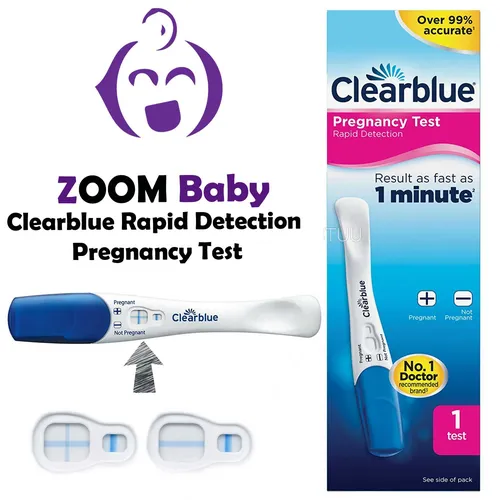
Ready to Test? Browse our complete range of pregnancy tests with fast, free UK delivery. From ultra-early detection to budget-friendly test strips, we have the right test for your needs.
What Customers Say
“I used these ovulation tests in 2009 and conceived the first month of trying, confirmed by the free pregnancy test that came with it. I couldn’t believe the pregnancy test could be accurate as they look so flimsy compared to the expensive ones you buy in the shop – so I bought a ‘proper’ one which only confirmed what the free test had told me.”
— Laura R.
“After 2 months of using the ovulation kits I got the chance to use one of the pregnancy testing strips and I’m pleased to say it was positive! I’m now 16 weeks pregnant and am sure we would still be trying to conceive had I not used your products. Thank you Zoom Baby.”
— Tina W.
“Very pleased with these pregnancy tests. They look to be good quality and you cannot argue with the price or quick delivery. I bought some cheap pregnancy test on eBay last time but these certainly seem to be better quality. Recommend.”
— Jacqui L.
In Conclusion
Understanding how quickly you can get pregnancy test results depends on several key factors: the sensitivity of your test, the timing of when you test, and how carefully you follow the instructions. While most doctors recommend waiting until after your missed period for the most reliable results, highly sensitive tests can detect pregnancy as early as 8 days after conception.
Remember that hCG levels double approximately every two days in early pregnancy, so if you get a faint line or test too early, waiting a few days and retesting with your first morning urine can provide clearer results. Whether you’re using an ultra-early detection test or a standard pregnancy test, following the instructions precisely and testing at the right time gives you the best chance of accurate results.
About the Author
Anthony Cunningham – Fertility Testing Expert & Editor
Anthony Cunningham, BA (Hons), MA, is a UK-based fertility testing expert and editor with over 20 years’ experience running Zoom Baby, a trusted source for accurate pregnancy, ovulation and fertility tests and testing guidance. He creates clear, evidence-based articles using NHS guidance, professional fertility resources, and conception planning best practices. Where possible, content is reviewed by fertility specialists and healthcare professionals to enhance accuracy and reliability, helping readers make informed testing decisions.
You May Also Like:
When Is the Best Time to Take a Pregnancy Test?
Learn the optimal timing for testing to get the most accurate results and avoid false negatives.
Are Pregnancy Tests Always 100% Correct?
Discover the factors that affect pregnancy test accuracy and how to ensure reliable results.
What Are the Best Early Pregnancy Tests?
Compare different early detection tests and find out which sensitivity levels work best for early testing.
The Best Way to Take a Pregnancy Test
Step-by-step guidance on using pregnancy tests correctly for the most accurate results.