About This Article
Zoom Baby has over 20 years’ experience supplying pregnancy, ovulation and fertility tests and providing practical testing guidance. This article explains how pregnancy test calculators work, when to take a pregnancy test and how to interpret their estimated dates.
Published: 29 April 2023 | Last Updated: 31 October 2026 | By: Anthony Cunningham
If you are trying to get pregnant or are concerned about the chances of pregnancy, a pregnancy test calculator can be a useful tool. This calculator uses information about your menstrual cycle, ovulation, and possible conception dates to estimate when you should take a pregnancy test.
What is a Pregnancy Test Calculator?
A pregnancy test calculator is a tool that can help you estimate when to take a pregnancy test. These calculators use information about your menstrual cycle and ovulation to estimate when you may have conceived and when you should take a pregnancy test.
How to Use a Pregnancy Test Calculator?
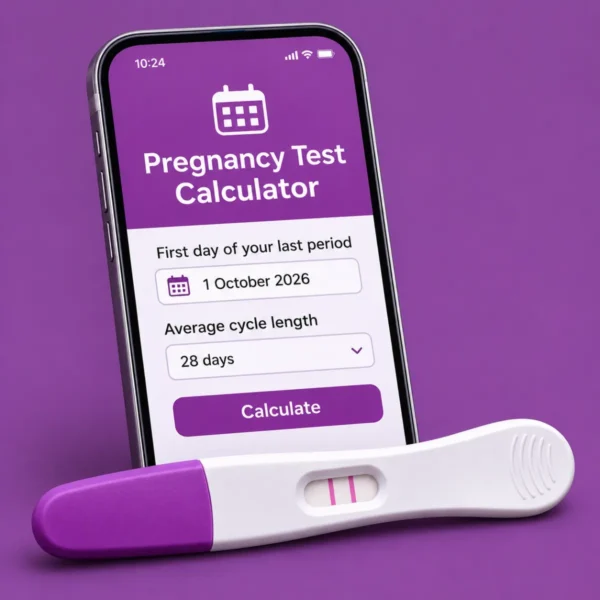
To use a pregnancy test calculator, you need to enter some basic information about your menstrual cycle. You will need to know the first day of your last menstrual period (LMP), the length of your menstrual cycle, and, where requested, the duration of your luteal phase (the time between ovulation and the start of your period).
Once you have entered this information, the calculator will estimate your ovulation date and the window of time during which you could have conceived. It will also give you an estimated date for when you should take a pregnancy test, based on your cycle information.
These dates are estimates because ovulation can vary from one cycle to another. Most pregnancy tests are most reliable from the first day of a missed period. If you do not know when your next period is due, the NHS recommends testing at least 21 days after unprotected sex. For more information, see the NHS guidance on pregnancy testing.
Why Use a Pregnancy Test Calculator?
There are several reasons why you may want to use a pregnancy test calculator:
1. To Plan for Pregnancy
If you are trying to conceive, a pregnancy test calculator can help you estimate your fertile window. By knowing your estimated ovulation date and the window of time during which you are most likely to conceive, you can plan when to have intercourse. However, the calculator cannot predict ovulation with certainty.
2. To Confirm Pregnancy
If you have missed a period or are experiencing other pregnancy symptoms, a pregnancy test calculator can help you determine when to take a pregnancy test. By testing at the right time, you can improve the reliability of your result and reduce the chance of a false negative. A calculator cannot confirm pregnancy itself; you need to take a pregnancy test.
3. To Avoid Pregnancy
If you are trying to avoid pregnancy, a pregnancy test calculator should not be relied upon as a method of contraception. Ovulation dates can vary, and estimates based on your menstrual cycle cannot reliably identify days when pregnancy is impossible. Use an appropriate method of contraception and seek advice from a pharmacist or sexual health service if you need guidance.
The First Response Pregnancy Test Calculator
First Response has produced a useful online pregnancy test calculator that Zoom Baby customers may find helpful. Their pregnancy test calculator can help you decide when to take your First Response Early Result Pregnancy Test.
The calculator can help you avoid testing before there is sufficient pregnancy hormone in your urine for a test to detect.
If you are trying to conceive, taking a pregnancy test can be an exciting, yet nerve-wracking experience. It’s important to time your testing correctly in order to avoid any disappointment or false negatives. That’s where the pregnancy test calculator from First Response comes in handy.
The calculator takes into account the length of your menstrual cycle and the date of your last period to determine when you are most likely to ovulate and when you should take a pregnancy test. It’s important to note that this calculator provides an estimate and is not a guarantee of when you will ovulate or when you should take a pregnancy test.
Typically, the best time to take a pregnancy test is when you have missed your period. However, some women experience early pregnancy symptoms and may want to test before their missed period. The First Response Early Result Pregnancy Test is designed for use up to six days before a missed period, but an early negative result does not rule out pregnancy. The likelihood of detecting pregnancy increases as you approach your expected period.
Using the pregnancy test calculator can give you an idea of when it may be appropriate to take a pregnancy test, but it’s important to pay attention to any early pregnancy symptoms you may be experiencing. These symptoms may include fatigue, nausea, breast tenderness, and frequent urination. Symptoms alone cannot confirm pregnancy.
If you receive a negative result but still think you may be pregnant, wait a few days and test again. If a second test is negative and your period has not arrived, speak to your GP.

First Response Early Results Pregnancy Tests
If you are considering testing before your expected period, the First Response Early Results Pregnancy Test is designed to detect pregnancy hormone at an early stage. Follow the product instructions carefully and remember that testing too early can produce a negative result even when you are pregnant.
In conclusion, a pregnancy test calculator is a helpful tool for anyone who is trying to conceive or is concerned about the possibility of pregnancy. By using such a calculator, you can estimate when to take a pregnancy test and improve your chances of getting a reliable result.
About the Author
Anthony Cunningham, BA (Hons), MA, is a UK-based fertility testing expert and editor with over 20 years’ experience running Zoom Baby, a trusted source for accurate pregnancy, ovulation and fertility tests and testing guidance. He creates clear, evidence-based articles using NHS guidance, professional fertility resources, and conception planning best practices. Where possible, content is reviewed by fertility specialists and healthcare professionals to enhance accuracy and reliability, helping readers make informed testing decisions.
Medical Disclaimer
This article is for general information only and is not a substitute for professional medical advice, diagnosis or treatment. If you have concerns about your health or symptoms, speak to your GP or another qualified healthcare professional. In an emergency, seek urgent medical help.