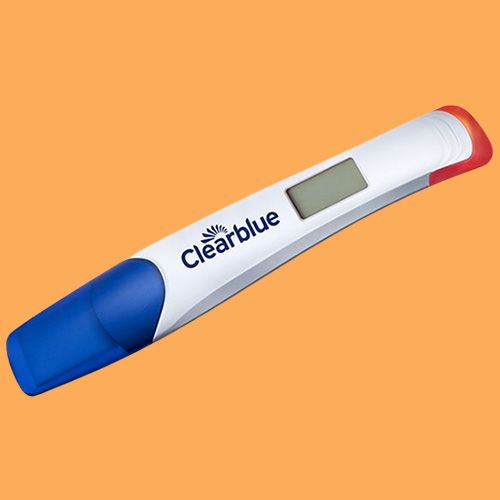
Clearblue Pregnancy Tests are a reliable and accurate way to confirm if you’re pregnant or not. When it comes to determining when you can use the test to get a clear answer, timing is key!
Clearblue Pregnancy Tests are designed to detect the presence of hCG (human Chorionic Gonadotropin), which is a hormone released to indicate a pregnancy. This hormone only appears in high enough levels in the body after implantation of the embryo into the uterus has occurred. Therefore, the earliest you can use a pregnancy test is a few days after your expected period.
Many Zoom Baby customers choose Clearblue as a convenient and reliable way to confirm or rule out pregnancy. Clearblue’s range of easy home tests work by detecting hCG in your urine sample. The tests offer quick results, usually within a few minutes, allowing you to find out if you’re expecting in the privacy of your own home.
Clearblue Pregnancy Tests are trusted as they offer highly accurate results, providing over 99% accuracy when used on the day of your missed period. However, it’s important to note that the accuracy increases as you wait a few days after your missed period to test. This is because the levels of hCG in your body continue to rise during early pregnancy, making it easier for the test to detect the hormone.
There are several pregnancy tests available from Clearblue, including the Clearblue Digital Ultra Early Pregnancy Test, which gives results six days before your missed period.
You can find a digital display on some Clearblue pregnancy tests. The Clearblue test has a clear ‘Pregnant’ or ‘Not Pregnant’ result, unlike traditional tests, which are sometimes difficult to interpret. One of the reasons couples like using the Clearblue Digital Early Detection Pregnancy Test is because of this feature. It is even possible to determine how many weeks you are pregnant with the Clearblue Digital Pregnancy Test with Weeks Indicator. As well as telling you whether you are pregnant or not, it also tells you what stage you are at.
For the most accurate test results, it’s best to wait until you’ve missed your period by at least one day. If you don’t wait to take the pregnancy test until your period is late, you could get a false negative result. This means the test could indicate you’re not pregnant when you actually are.
On the flip side, if you end up taking the test too early, you could get a false positive result. This means the test could indicate you’re pregnant when you actually aren’t. This is because hCG levels can be present in some women’s bodies as a result of taking certain medications or from a recent miscarriage.
To avoid getting a false negative or positive result, the best time to take a Clearblue Pregnancy Test is a few days after your missed period. This will give an accurate indication of your pregnancy status that you can trust.
So, to get the most reliable results from a Clearblue Pregnancy Test, make sure you wait until your period is late before you test. This will give you an accurate indication of your pregnancy status, allowing you to make an informed decision about your next steps.
Our Recommended Product
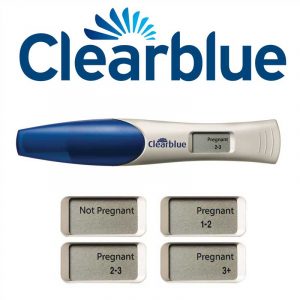
Looking for the most reliable way to find out if you’re pregnant? We highly recommend the Clearblue Digital Pregnancy Test with Weeks Indicator. This clever device not only tells you if you’re pregnant but also estimates how many weeks along you are.
What makes it special? It’s incredibly easy to use – just hold the stick in your urine stream for 5 seconds. Within 3 minutes, you’ll get your answer in clear words: ‘Pregnant’ or ‘Not Pregnant’. If you’re pregnant, it will also tell you how many weeks since conception. No more squinting at lines or wondering what they mean!
The test is over 99% accurate from the day your period is due, and you can even use it up to 4 days before your expected period. Its Smart Dual Sensor technology gives you results you can trust, which is why it’s the UK’s most recommended brand by doctors.
Each pack contains one test, and it’s perfect for anyone who wants a clear, digital answer about their pregnancy status. Get yours today for quick, accurate results in the privacy of your own home.
Photo by Anthony Cunningham for Zoom Baby
Zoom Baby is a leading supplier of Pregnancy Tests and Ovulation Test Kits
This post was originally published in 2022. It was last updated in January 2025.