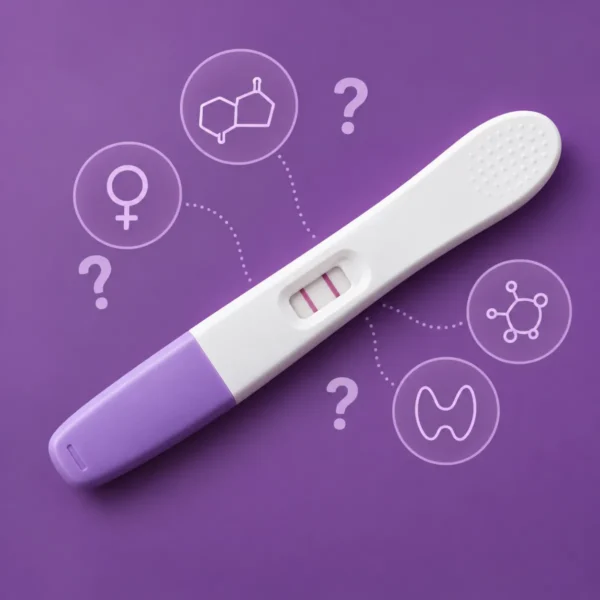
About This Article
Zoom Baby has provided pregnancy and fertility testing guidance for over 20 years. This article explains how hormones, fertility medicines and test timing may affect pregnancy test results.
Last Updated: 12 October 2026 | By: Anthony Cunningham
Pregnancy tests work by detecting the presence of human chorionic gonadotrophin (hCG), a hormone produced during pregnancy, in urine or blood. This leads many women to wonder: can hormones other than hCG affect pregnancy test results? Most ordinary hormonal changes do not cause a false positive, although certain fertility medicines containing hCG can affect results.
How Pregnancy Tests Work
Pregnancy tests detect hCG, which begins to be produced after implantation. Levels of hCG usually rise rapidly during early pregnancy. The amount needed for a positive result varies by test brand and sensitivity.
How Hormones Can Affect Pregnancy Test Results
hCG is not the only hormone present in the body. However, most fluctuations in other hormones do not directly change pregnancy test results. Changes to the menstrual cycle can make it harder to know when to test.
Progesterone
Progesterone helps prepare the uterus for pregnancy. Some contraceptive pills contain a synthetic progestogen. Progesterone, progestogen-only contraception and hormone therapy do not themselves cause false-positive pregnancy test results.
Follicle Stimulating Hormone (FSH)
FSH regulates ovarian follicle development. Elevated FSH levels are associated with perimenopause and menopause. High FSH does not ordinarily cause a positive pregnancy test, although irregular periods can make test timing difficult.
Luteinizing Hormone (LH)
LH triggers ovulation. An LH surge before ovulation does not normally cause a positive result on a modern pregnancy test. Some fertility treatments include an hCG trigger injection, however, which can produce a positive result for several days after treatment.
Human Growth Hormone (HGH)
HGH helps regulate growth and metabolism. HGH treatment is not a recognised common cause of false-positive pregnancy tests. If you are using fertility or hormone treatments, check with your clinician which medicines might affect your test.
Thyroid Hormone
Thyroid hormones T3 and T4 can affect menstrual cycles and fertility. Both hypothyroidism and hyperthyroidism may cause irregular periods, complicating the timing of pregnancy testing. Thyroid hormones do not ordinarily cause false-positive results.
Estrogen
Oestrogen works with other hormones to control the menstrual cycle. High oestrogen levels do not themselves cause a false-positive pregnancy test. Conditions affecting ovarian function can, however, make periods irregular.
Evaporation Lines
Evaporation lines may be mistaken for a positive pregnancy test result. A mark can appear as a test dries after the recommended reading time. Only interpret a result within the time stated in the manufacturer’s instructions; a faint coloured line appearing within that window may be positive.
Avoiding Inaccurate Results
While it is possible for certain fertility medicines to interfere with pregnancy test accuracy, there are steps women can take to avoid false results:
- Test from the first day of a missed period, or at least 21 days after unprotected sex if your period date is unknown.
- Follow the test instructions carefully.
- Read the result within the manufacturer’s specified time window.
- Treat a faint positive line appearing within the reading window as potentially positive.
- Repeat a negative test after a few days if pregnancy is still possible.
- Speak to a healthcare professional if results remain unclear.
A quantitative hCG blood test can help a healthcare professional assess an uncertain result. Home urine tests are convenient and accurate when used correctly, but testing too early or misreading a result can cause confusion.
Potential Causes of Inaccurate Results
Hormonal fluctuations happen routinely throughout the menstrual cycle and may make pregnancy testing difficult to time. Certain medical conditions or medicines can also affect interpretation:
- Polycystic Ovary Syndrome (PCOS): PCOS can cause irregular or absent periods, making it difficult to know when to test. PCOS itself does not normally cause a false-positive pregnancy test.
- Ovarian Tumours: Rare hCG-producing tumours can cause a positive result unrelated to pregnancy. Unexpected positive results need clinical assessment.
- Perimenopause/Menopause: Irregular periods make test timing difficult. Occasionally, very low levels of hCG may be detected around or after menopause, requiring medical interpretation.
- Hormone Replacement Therapy: Standard oestrogen or progestogen HRT does not itself cause a false-positive pregnancy test.
- Fertility Drugs: Medicines containing hCG, particularly trigger injections, can cause a temporary positive result. Follow the testing date provided by your fertility clinic.
- Recent Birth Control: After stopping contraception, periods may be irregular. Residual contraceptive hormones do not themselves cause a positive pregnancy test.
- Breastfeeding: Breastfeeding can delay the return of periods and ovulation, making testing dates uncertain. It does not itself cause false-positive tests.
- Medications: Most medicines do not affect pregnancy tests. Tell your healthcare professional about any fertility medicines, particularly those containing hCG.
When to Retest
If unsure of results, repeat testing is advisable:
- Wait a few days after an early negative test, then retest.
- Use first-morning urine if testing very early, and avoid drinking excessive fluids beforehand.
- If your period remains absent after a second negative result, speak to your GP.
- If you have had an hCG fertility injection, follow your clinic’s specified testing date.
- Do not stop prescribed hormones or other medicines simply to take a pregnancy test.
- Read the result within the time specified by the test manufacturer.
Seek urgent medical help for severe one-sided abdominal pain, shoulder-tip pain, fainting or heavy bleeding, particularly if pregnancy is possible.
Featured Product: Zoom Baby Early Pregnancy Tests
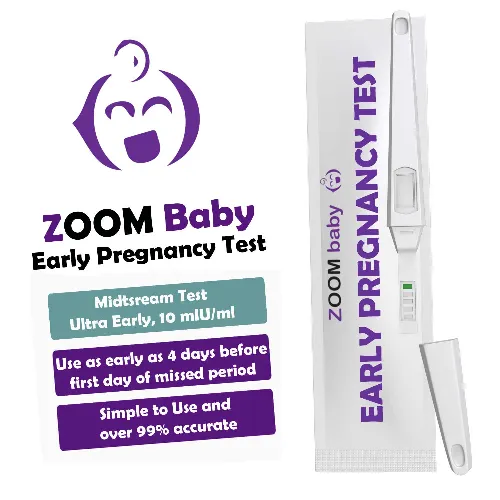
If you’re unsure whether you’re pregnant, a reliable home pregnancy test can help. Our Zoom Baby early pregnancy tests are designed to detect hCG in urine, with selected tests suitable for use before your missed period. Always follow the manufacturer’s testing instructions.
For further guidance, see the NHS pregnancy testing advice and NHS fertility treatment testing guidance.
About the Author
Anthony Cunningham, BA (Hons), MA, is a UK-based fertility testing expert and editor with over 20 years’ experience running Zoom Baby, a trusted source for accurate pregnancy, ovulation and fertility tests and testing guidance. He creates clear, evidence-based articles using NHS guidance, professional fertility resources, and conception planning best practices. Where possible, content is reviewed by fertility specialists and healthcare professionals to enhance accuracy and reliability, helping readers make informed testing decisions.
Medical Disclaimer
This article is for general information only and is not a substitute for professional medical advice, diagnosis or treatment. If you have concerns about your health or symptoms, speak to your GP or another qualified healthcare professional. In an emergency, seek urgent medical help.