About This Article
Download free basal body temperature (BBT) charts in Fahrenheit or Celsius to help you record temperature changes throughout your menstrual cycle. This article also explains how BBT charting can help you recognise ovulation patterns.
Originally published: 2013 | Last Updated: 23 October 2026 | By: Anthony Cunningham
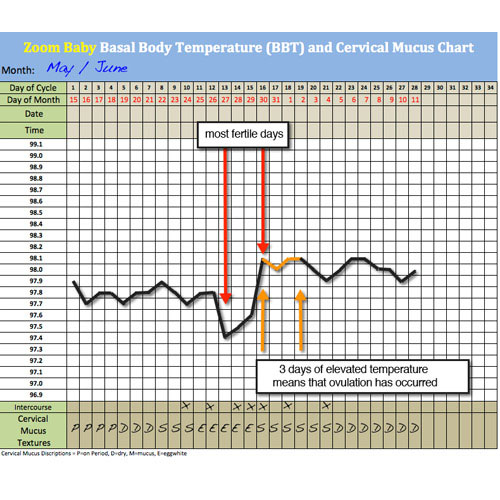
During a woman’s menstrual cycle, her body temperature will change. At the beginning of the menstrual cycle, her body temperature will generally be lower. Shortly after ovulation, her basal body temperature will usually rise slightly and remain elevated for the rest of that cycle, often lowering just before her next period. Because this pattern occurs in many women, we can record a woman’s basal body temperature on a daily basis and monitor when ovulation is likely to have occurred.
Keeping up daily temperature charting over a length of time will provide you with a good idea of your usual ovulation patterns. This can help you understand your menstrual cycle when trying to get pregnant. However, because the temperature rise generally happens after ovulation, BBT charting is more useful for confirming ovulation retrospectively than predicting your most fertile days in advance.
Observing changes in cervical mucus or using ovulation tests alongside BBT charting may help you identify your fertile window more effectively.
BBT Chart – Fahrenheit
Download our free BBT chart and you will be able to record your basal body temperature and cervical mucus. This will help you recognise temperature patterns associated with ovulation. This chart is perfect for use with the Zoom Baby Basal Thermometer.
Our friends at iProven also offer a BBT Chart (Fahrenheit) that can be used with their thermometer, as well as the Zoom Baby Basal Body Thermometer.
BBT Chart – Celsius
Our Basal Body Thermometer is a useful choice when you are recording your basal body temperature and cervical mucus. Our BBT Chart – Celsius can be downloaded here. Or, follow this link to download another PDF chart that can be used with this Basal Body Thermometer.
How to Use a Basal Body Thermometer
Our easy-to-follow guide will tell you how to use any of our Basal Body Thermometers.
For consistent results, take your temperature immediately after waking, before getting out of bed or starting your normal activities. Try to take it at approximately the same time each morning, using the same thermometer and measurement method.
Record your temperature on your BBT chart every day. Sleep disruption, illness, alcohol and changes to your normal routine can affect readings, so it can be helpful to note these alongside your temperature.
Look for a sustained temperature rise across several days rather than relying on a single reading. Remember that BBT patterns vary between individuals and cannot confirm the exact day of ovulation with certainty.
Featured Product
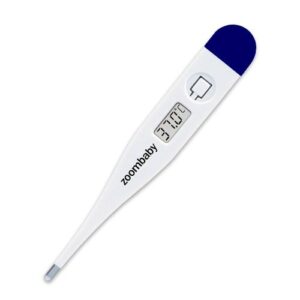
Basal Ovulation Thermometer and 6 Fertility Charts
If you would like to start tracking your basal body temperature, the Zoom Baby Basal Ovulation Thermometer and Fertility Charting Pack brings together a thermometer and charts for recording your daily readings.
About the Author
Anthony Cunningham, BA (Hons), MA, is a UK-based fertility testing expert and editor with over 20 years’ experience running Zoom Baby, a trusted source for pregnancy, ovulation and fertility tests and testing guidance. He creates clear, evidence-based articles using NHS guidance, professional fertility resources and conception planning best practices. Where possible, content is reviewed by fertility specialists and healthcare professionals to enhance accuracy and reliability, helping readers make informed testing decisions.
Medical Disclaimer
This article is for general information only and is not a substitute for professional medical advice, diagnosis or treatment. If you have concerns about your health or symptoms, speak to your GP or another qualified healthcare professional. In an emergency, seek urgent medical help.