About This Article
Zoom Baby has over 20 years’ experience providing pregnancy, ovulation and fertility tests and clear testing guidance. This article explains why a pregnancy test can occasionally give a negative result even when pregnancy is present, including early testing, diluted urine and the rare hook effect.
Published: 5 November 2025 | Last Updated: 21 August 2026 | By: Anthony Cunningham
Home pregnancy tests can be very accurate when used correctly, but a negative result does not always mean that you are not pregnant. Testing too early, not following the instructions correctly and, more rarely, unusually high levels of the pregnancy hormone hCG can all affect the result.
If your pregnancy test is negative but your period has not arrived or you still think you may be pregnant, it may simply be too early to detect enough hCG. Here we look at the common reasons for false negative pregnancy tests, as well as the much less common phenomenon known as the hook effect.
Contents
- Why Can a Pregnancy Test Be Negative When You Are Pregnant?
- What Is the Hook Effect?
- Other Reasons for a False Negative Pregnancy Test
- What Should I Do After a Negative Pregnancy Test?
- Best Practices for Accurate Results
- False Negative Pregnancy Tests: The Bottom Line
Why Can a Pregnancy Test Be Negative When You Are Pregnant?
Home pregnancy tests work by detecting human chorionic gonadotrophin (hCG) in your urine. This hormone starts to be produced after fertilisation and rises during early pregnancy.
The most common reason for a false negative result is simply taking the test too early. If there is not yet enough hCG in your urine for the test to detect, the result may be negative even though you are pregnant.
Much more rarely, very high levels of hCG can interfere with the way some pregnancy tests work. This is known as the hook effect.
What Is the Hook Effect?
Most home pregnancy tests use antibodies designed to react with hCG. Normally, hCG binds with these antibodies and produces the signal that appears as a positive result.
In the hook effect, an unusually high concentration of hCG can interfere with this process. The antibodies can become overwhelmed by the amount of hCG present, preventing the test from producing the expected positive result.
The hook effect is rare and should not be considered the likely explanation for most negative pregnancy tests. Testing too early or not following the test instructions correctly are much more common causes.
Important: If you continue to have pregnancy symptoms or your period has not arrived despite negative tests, speak to your GP or another healthcare professional for advice rather than trying to diagnose a hook effect yourself.
Other Reasons for a False Negative Pregnancy Test
There are several more common reasons why a pregnancy test may produce a negative result even when pregnancy is possible.
Testing too early
According to the NHS guidance on pregnancy testing, most pregnancy tests are most reliable from the first day of a missed period. Some sensitive tests can be used earlier, but testing early increases the possibility of a false negative result.
If you do not know when your next period is due, the NHS recommends taking a pregnancy test at least 21 days after the last time you had unprotected sex.
Not following the test instructions
Pregnancy tests vary in how they should be used and how long you need to wait before reading the result. Always follow the instructions supplied with your particular test and check the result within the stated time window.
Diluted urine
Very diluted urine can make a low concentration of hCG harder to detect, particularly when testing very early. Avoid drinking unusually large amounts of fluid immediately before taking a test.
The NHS advises that pregnancy tests can be carried out using urine collected at any time of day, so testing does not always have to be done first thing in the morning. Follow the instructions supplied with your particular pregnancy test.
An expired or incorrectly stored test
Always check the expiry date before using a pregnancy test. Tests should also be stored according to the manufacturer’s instructions, as incorrect storage may affect their performance.
What Should I Do After a Negative Pregnancy Test?
Home pregnancy tests are generally reliable when used correctly, but the NHS notes that a negative result is less reliable than a positive one.
If you receive a negative result but still think you may be pregnant, wait a few days and take another test. This gives hCG more time to rise if you are in the very early stages of pregnancy.
If a second test is negative and your period has still not arrived, speak to your GP or another healthcare professional for advice.
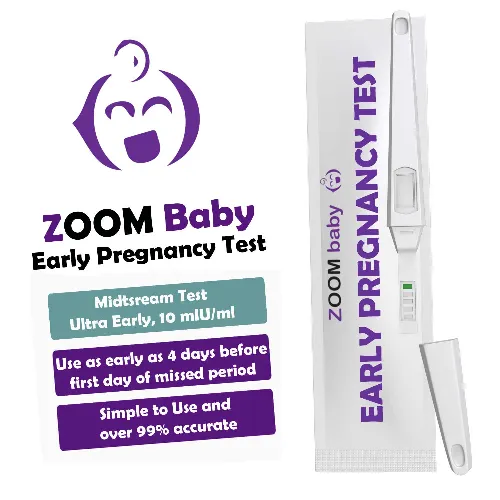
Featured Product: Midstream Pregnancy Tests – Extra Sensitive
If you are testing early, Zoom Baby’s Extra Sensitive Midstream Pregnancy Tests detect hCG at a sensitivity of 10 mIU/ml. They can be used before a missed period, although waiting until your expected period will generally give a more reliable result.
Best Practices for Accurate Pregnancy Test Results
Home pregnancy tests are generally very accurate when used correctly. These simple steps can help reduce the likelihood of an incorrect result:
- Test at the appropriate time. Most pregnancy tests are most reliable from the first day of a missed period. Testing earlier may increase the chance of a false negative.
- Read the instructions carefully. Different pregnancy tests can have different procedures and result-reading times.
- Avoid excessive fluids immediately before testing. Drinking a large amount may dilute your urine, particularly if you are testing very early.
- Check the expiry date. Do not use a pregnancy test that has passed its expiry date.
- Read the result at the correct time. Check the result within the time window specified in the instructions rather than too early or much later.
- Repeat the test if necessary. If your result is negative but you still think you may be pregnant, wait a few days and test again.
- Use the test exactly as directed. Follow the manufacturer’s instructions for collecting the urine sample and applying it to the test.
- Seek advice if you remain unsure. If a second test is negative and your period has still not arrived, speak to your GP or another healthcare professional.
False Negative Pregnancy Tests: The Bottom Line
A false negative pregnancy test is possible, but the most likely explanations are testing too early or not using the test exactly as instructed. The hook effect can cause a false negative result, but it is rare.
For the most reliable result, follow the instructions supplied with your pregnancy test and test from the first day of a missed period where possible. If you do not know when your period is due, the NHS recommends testing at least 21 days after the last time you had unprotected sex.
If you receive a negative result but still think you may be pregnant, wait a few days and test again. If a second test is negative and your period has still not arrived, speak to your GP or another healthcare professional.
About the Author
Anthony Cunningham, BA (Hons), MA, is a UK-based fertility testing expert and editor with over 20 years’ experience running Zoom Baby, a trusted source for accurate pregnancy, ovulation and fertility tests and testing guidance. He creates clear, evidence-based articles using NHS guidance, professional fertility resources, and conception planning best practices. Where possible, content is reviewed by fertility specialists and healthcare professionals to enhance accuracy and reliability, helping readers make informed testing decisions.