

About This Article
Zoom Baby has supplied pregnancy, ovulation and fertility tests to UK customers for nearly 20 years. This guide draws on our experience helping thousands of people understand fertility supplements, conception planning, and preconception nutrition. Always consult healthcare professionals for medical advice regarding conception and pregnancy.
Published: July 6, 2016 | Last Updated: January 14, 2026 | By Anthony Cunningham
If you are planning to conceive it is important that you consume a nutritious diet and follow a healthy lifestyle as both will increase the chances of conception. Pregnacare Conception nutritional tablets are specially formulated to meet the nutritional requirements of women who wish to conceive.
Contents
What Is Pregnacare Conception?
According to the manufacturers, worldwide research has shown that specific nutrients play a vital role in helping to build adequate nutritional stores in preparation for pregnancy and to ensure excellent reproductive health. Vitabiotics Pregnacare Conception formula was exclusively developed with this in mind.
Some experts argue that multivitamins such as Pregnacare Conception are not needed by women when trying for a baby. At the conclusion of this article, we look at those claims.
Key Ingredients and Their Benefits
The Vitabiotics Pregnacare Conception formula includes:
Vitamin B12 & B6
These are part of the B complex group of vitamins. Vitamin B6 is recommended prior to conception, and vitamin B12 is thought to maintain good reproductive health and maintain healthy ovarian function.
Inositol
Inositol is thought to support ovarian function and boost fertility. It is an important part of the cell signalling pathway which has an effect on cell growth and fertilisation.
L-arginine
L-arginine is a widely known ingredient that is involved in nitric oxide (NO) metabolism. L-arginine is thought to promote regular follicular release as well as maintaining healthy implantation and follicular blood flow.
N-acetyl Cysteine
N-acetyl cysteine is part of glutathione production (a significant antioxidant present in the body). It also helps in the production of healthy cervical secretions.
Folic Acid
400mcg of folic acid is present in the Pregnacare Conception formula which is the amount recommended by the NHS for all women who are trying to conceive. Folic acid is thought to play a role during conception and is vital during the early days and weeks of pregnancy. It also assists the healthy development of foetal neural tube defects.
Antioxidant Minerals and Natural Vitamin E
These are essential cofactors in antioxidant enzymes, and help to safeguard genetic material from free radical damage.
Vitabiotics Pregnacare Conception can be used as soon as a couple start trying for a baby. If you are using the product, and are happy with the results, do not forget to leave a Pregnacare Conception Review on the product page.
Lifestyle Tips for Conception
Whilst Pregnacare Conception offers a convenient way to boost your nutrient intake, it’s worth noting that a balanced diet is equally crucial. Try incorporating fertility-friendly foods into your meals. Tuck into leafy greens like spinach and kale for folate, snack on Brazil nuts for selenium, and enjoy oily fish like salmon for omega-3s. Don’t forget to stay hydrated – aim for 6-8 glasses of water daily.
Regular exercise can also improve your chances of conception; consider gentle activities like yoga or swimming. The NHS recommends planning your pregnancy by maintaining a healthy weight, avoiding smoking and limiting alcohol consumption.
Understanding when you can get pregnant is also essential for optimising your conception chances. Remember, conception is a journey, not a race. Take time to relax and manage stress through meditation or hobbies you enjoy. For more comprehensive guidance, explore our article on 7 simple ways to improve your fertility.
Should I Take Multivitamins During Pregnancy?
There are some brands of multivitamins that claim to provide pregnant women with optimal nutritional support, but these products are often expensive. Their claims and prices are often not supported by evidence.
During pregnancy, vitamin supplements are often not needed, according to a review in the Drug and Therapeutics Bulletin. In their opinion, complex multivitamin and mineral preparations used during pregnancy are unlikely to be needed by most pregnant women and are an unnecessary expenditure.
During pregnancy and until the end of the first trimester, women should take vitamin D (10 micrograms daily) and folic acid (400 micrograms) and maintain a healthy diet. The NHS provides clear guidance on vitamins and supplements during pregnancy. Compared to a multivitamin preparation, buying two tablets separately usually costs less.
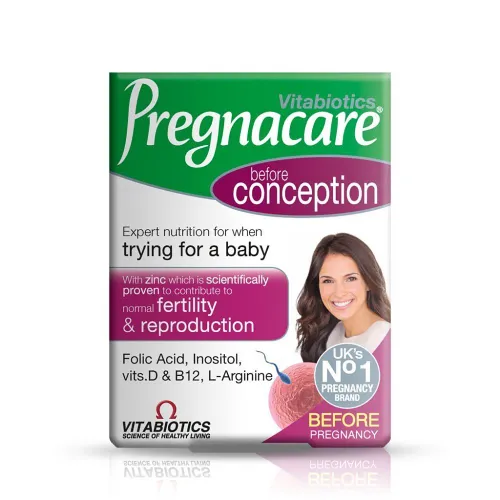
Ready to Optimise Your Preconception Health? Pregnacare Conception provides essential nutrients including 400mcg folic acid, inositol, L-arginine, and vitamin B complex to support your conception journey. Specially formulated for women planning pregnancy.
What Customers Say
“Tests look great and seem simple to use. Will start trying them out in the next few days. Also interested to see how I get along with the fertility vitamins. I must admit that I never knew such a product existed. The pills seem nice and small which is a bonus as I hate swallowing tablets!”
— Helen J., Zoom Baby Customer
“I like these tablets so far as they are so easy to swallow. I’m not pregnant yet but it’s early days, so fingers crossed!”
— Sara, Zoom Baby Customer
“Easy-to-take and well priced vitamins for men. My husband has not complained about taking these.”
— Carol T., Zoom Baby Customer
In Conclusion
Pregnacare Conception offers a convenient way to ensure you’re getting key nutrients when planning pregnancy, particularly the recommended 400mcg of folic acid. While some experts suggest that complex multivitamins may not be necessary during pregnancy itself, preconception nutrition plays an important role in building adequate nutritional stores. The formula includes research-backed ingredients such as inositol, L-arginine, and B vitamins to support reproductive health.
Whether you choose Pregnacare Conception or opt for individual supplements, the most important factor is maintaining a balanced diet, healthy lifestyle, and following NHS guidance on preconception health. Always consult with your GP or fertility specialist for personalised advice tailored to your specific circumstances.
About the Author
Anthony Cunningham – Fertility Testing Expert & Editor
Anthony Cunningham, BA (Hons), MA, is a UK-based fertility testing expert and editor with over 20 years’ experience running Zoom Baby, a trusted source for accurate pregnancy, ovulation and fertility tests and testing guidance. He creates clear, evidence-based articles using NHS guidance, professional fertility resources, and conception planning best practices. Where possible, content is reviewed by fertility specialists and healthcare professionals to enhance accuracy and reliability, helping readers make informed testing decisions.
You May Also Like:
7 Simple Ways to Improve Your Fertility
Discover evidence-based lifestyle changes, dietary tips, and practical strategies to boost your fertility naturally and improve your chances of conception.
How Exercise Can Improve Your Fertility
Learn how the right type and amount of exercise can boost fertility for both men and women, plus NHS guidance on physical activity for conception.
When Can You Get Pregnant?
Understanding your fertile window is crucial when trying to conceive. Find out the best time to get pregnant and how to identify your most fertile days.
Using Ovulation Prediction Kits
Complete guide to ovulation prediction kits including how they work, when to use them, and tips for getting the most accurate results.




Zoom Baby is a leading supplier of Pregnancy Tests and Ovulation Test Kits.