About This Article
Zoom Baby has more than 20 years’ experience helping parents choose practical products and information for babies and young children. This article explains how loud sporting events can affect hearing and the sensible steps parents can take to reduce a baby’s exposure to excessive noise.
Published: 29 June 2023 | Last Updated: 23 August 2026 | By: Anthony Cunningham
There is nothing quite like the atmosphere at the start of a big match. As the teams enter the stadium, a low hum of conversation can turn into thousands of people cheering in a matter of seconds.
For adults, that noise is often part of the excitement. For babies and young children, however, a very loud stadium can be overwhelming and may expose their hearing to potentially harmful sound levels.
If you are planning to take your baby to a football match, rugby game, motor race or another noisy sporting event, a little preparation can make a big difference.
Contents
- Why loud matches can affect hearing
- How loud is too loud?
- How to protect your baby’s hearing at a match
- Choosing ear defenders for babies
- Getting the fit right
- Other loud events
- When to seek advice
Why Loud Matches Can Affect Hearing
In the excitement of a big match, it can be easy to underestimate how loud the stadium has become and how long your family has been exposed to the noise.
Crowd celebrations, public-address systems, music, drums and other sudden bursts of sound can all contribute to the overall noise level. Loud sound can damage the sensitive structures within the inner ear, and noise-induced hearing loss can be permanent.
Babies cannot tell you that a sound is uncomfortably loud or decide to move somewhere quieter themselves, so parents and carers need to manage their exposure for them.
How Loud Is Too Loud?
Sound is measured in decibels (dB). According to RNID guidance on safe listening, repeated or prolonged exposure to sound at 85 dB or above can cause hearing loss. The louder the sound, the less time it takes for potentially harmful exposure to occur.
That means hearing safety is not simply about whether a noise feels painful. A busy sporting venue can expose families to high sound levels for an extended period, particularly when seats are close to loudspeakers or other concentrated sources of noise.
How to Protect Your Baby’s Hearing at a Match
You do not necessarily need to avoid every noisy event, but it is sensible to reduce your baby’s exposure where possible. Hearing protection is only one part of that approach.
- Use properly fitting baby ear defenders. Choose hearing protection specifically designed for babies rather than adult earmuffs or earplugs.
- Sit away from loudspeakers. Avoid seats immediately beside public-address speakers, bands, drums or other obvious sources of high-volume sound.
- Take quieter breaks. Leave the seating area periodically and spend some time somewhere less noisy.
- Watch your baby’s reaction. If your baby appears distressed, uncomfortable or unsettled by the environment, move somewhere quieter.
- Keep the ear defenders with you. Pack them with bottles, nappies, spare clothes and the other essentials so they are ready before the noise increases.
Hearing protection is intended to reduce noise exposure rather than make an extremely loud environment completely risk-free. Distance from the noise source and the amount of time spent in a loud environment remain important.
Choosing Ear Defenders for Babies
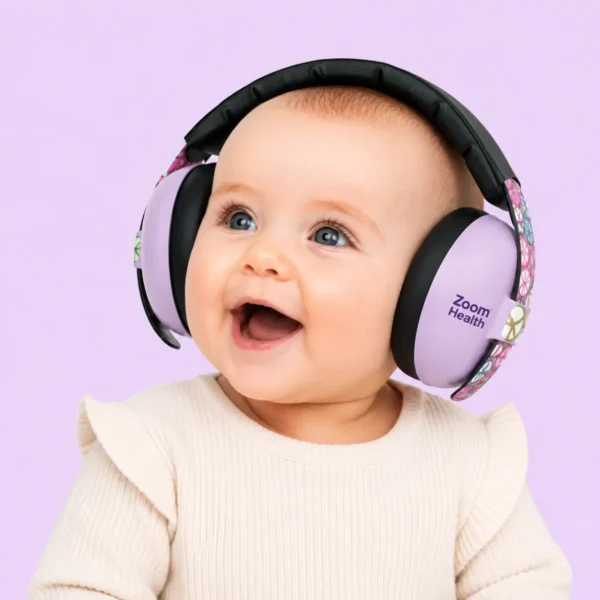
Ear defenders designed specifically for babies are generally a better option than putting earplugs into very small ears. They should cover the ears properly while remaining comfortable enough for your baby to tolerate wearing them.
Look for a lightweight design, padded ear cups and an adjustable headband. The fit needs to be secure enough to maintain a seal around the ears without placing unnecessary pressure on your baby’s head.
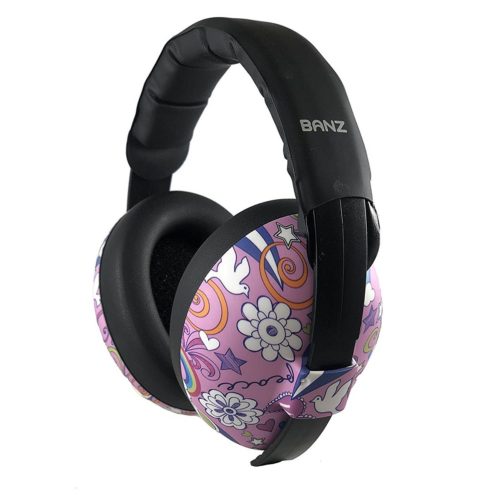
Featured Product: Banz Bubzee Baby Earmuffs – Peace
Designed specifically for babies and toddlers from around 3 months to 2 years, Banz Bubzee earmuffs have padded ear cups, an adjustable headband and a lightweight design. The Banz Bubzee Baby Earmuffs – Peace are available from our sister site, Zoom Health, and are designed to help reduce exposure to excessive noise at sporting events and other loud environments.
Getting the Fit Right
Even good hearing protection will be less effective if it does not fit correctly. Before entering a noisy area, check that both ear cups completely cover your baby’s ears and that hair, clothing or a hat is not interfering with the seal.
The headband should keep the earmuffs in place without being uncomfortably tight. Check the fit during the event too, particularly after carrying your baby, feeding them or moving them in and out of a pushchair or carrier.
Do not assume that a particular noise-reduction figure means exactly the same reduction will be achieved every time. Laboratory ratings are useful for comparing products, but the protection achieved in real-world use also depends on fit and how consistently the earmuffs are worn.
Other Loud Events
Baby ear defenders can be useful for other short-term situations where noise levels are unusually high, including:
- firework displays
- concerts and festivals
- motor racing and air shows
- parades and public celebrations
- other large indoor or outdoor events with amplified sound
They should not normally be used simply to block ordinary everyday sounds. NHS audiology guidance notes that children need exposure to normal environmental sounds and recommends hearing protection primarily for short-term situations involving genuinely loud noise, such as concerts and fireworks.
When to Seek Advice
If your child experiences persistent ringing in the ears, appears to have difficulty hearing after a loud event, complains of ear pain, or you have any concerns about their hearing, seek medical advice. Your GP, health visitor or local audiology service can advise you about appropriate assessment.
Enjoy the Match Without Forgetting Their Ears
Taking a baby to a big sporting event can be a memorable family experience, but stadium noise deserves a little planning. Choose appropriate baby ear defenders, fit them properly, keep away from the loudest parts of the venue where possible and give your baby regular breaks from high noise levels.
Those simple precautions can help reduce unnecessary noise exposure while still allowing the family to enjoy the occasion together.
About the Author
Anthony Cunningham, BA (Hons), MA, is a UK-based fertility testing expert and editor with over 20 years’ experience running Zoom Baby, a trusted source for accurate pregnancy, ovulation and fertility tests and testing guidance. He creates clear, evidence-based articles using NHS guidance, professional fertility resources, and conception planning best practices. Where possible, content is reviewed by fertility specialists and healthcare professionals to enhance accuracy and reliability, helping readers make informed testing decisions.