

About This Article
Zoom Baby has supplied pregnancy, ovulation and fertility tests to UK customers for nearly 20 years. This guide draws on our experience helping thousands of people understand pregnancy test timing, early detection, and conception planning. Always consult healthcare professionals for medical advice regarding conception and pregnancy.
Published: 30 October 2024 | Last Updated: 08 January 2026 | By Anthony Cunningham
All home pregnancy tests work in the same basic way: they detect hCG (human chorionic gonadotropin), the pregnancy hormone, in urine. But how soon will a pregnancy test read positive? This can only happen after your fertilised egg implants in the uterus. At this stage, hCG starts being produced, flowing into your blood and then into your urine.
Most modern pregnancy test kits can detect hCG in urine as soon as 3-4 days after implantation, though it sometimes takes longer. If you are pregnant, about 74% of home pregnancy tests will show a positive result on the day you miss your period. This means a negative result is normal in approximately 26% of all pregnancies. You may need to retest later to get a definitive result.
Once you pass 10 or more days after the missed period, a negative pregnancy test result makes it unlikely that you are pregnant. According to NHS guidance on pregnancy testing, most tests are accurate from the first day of a missed period.
Pregnancy Test Accuracy by Day
The table below shows how soon a pregnancy test will read positive, dependent on the day you take it:
- 3 days before expected period — 51% positive
- 2 days before expected period — 62% positive
- 1 day before expected period — 68% positive
- Day of expected period — 74% positive
- 1 day after expected period — 79% positive
- 2 days after expected period — 85% positive
- 3 days after expected period — 90% positive
- 7+ days after expected period — 96% positive
Factors That Determine a Positive Result
Implantation Timing
The timing of implantation is a critical factor. hCG can normally be detected in the bloodstream between 9 and 16 days after ovulation. Urine hCG typically appears about two to three days after blood hCG first appears.
However, implantation timing varies from person to person. Some may experience implantation as early as six days after ovulation, while others may not experience it until 12 days later. Understanding the signs of ovulation can help you time your testing more accurately.
In some cases, women experience implantation bleeding which can be mistaken for a light period. This can cause confusion when determining when to take a pregnancy test. The Royal College of Obstetricians and Gynaecologists recommends waiting a few days after experiencing any unusual bleeding before testing.
It’s also important to note that hCG levels vary during pregnancy. In the early stages, hCG levels double every 48 to 72 hours until they peak around eight to 11 weeks gestation. After that, they slowly decline and level off for the rest of the pregnancy.
Urine Concentration Throughout the Day
Urine hCG levels vary during the day. How much you drink affects urine concentration, which in turn impacts how quickly you’ll see a positive result. You’ll typically get the most accurate results by testing first thing in the morning, when your urine is most concentrated after a night’s sleep.
If you’re eager to test later in the day (we understand, the suspense is real!), try to hold your urine for at least four hours and limit your fluid intake beforehand. For more guidance, see our article on when is the best time to take a pregnancy test.
We always recommend using reliable brands of pregnancy tests such as those made by Clearblue, First Response or Zoom Baby.
Test Sensitivity Matters
The sensitivity of the pregnancy test is critical. Different tests have different sensitivities, which affects how early pregnancy can be detected. Test sensitivity is measured in mIU/mL. The lower the number, the less hCG required to produce a positive test.
Thus a 20 mIU/mL test will be more sensitive to hCG than a 40 mIU/mL one, potentially showing a positive days before the less sensitive test detects it. If you’re wondering what are the best early pregnancy tests, look for those with lower mIU/mL thresholds.
Early pregnancy tests with low mIU/mL cut-offs include the First Response Early Results Pregnancy Test, the Clearblue Early Detection Pregnancy Test and the Clearblue Digital Early Detection Pregnancy Test.
Factors That Can Affect Test Accuracy
While home pregnancy tests are generally reliable, certain factors can influence their accuracy. If you take the test too early, before there’s enough hCG in your urine, you may get a false negative result. It’s best to wait until at least the first day of your missed period to test.
Certain medications, such as fertility drugs containing hCG, can cause false positive results. Rarely, medical conditions like ovarian cysts or ectopic pregnancy may also lead to misleading test results. If you’re experiencing a negative pregnancy test but your period is late, it’s worth investigating further.
According to NHS advice on pregnancy test accuracy, most tests are reliable when used correctly, but false negatives are more common than false positives, particularly when testing early.
When to See a Doctor
If you get a positive home pregnancy test, it’s important to follow up with your healthcare provider. They can confirm the pregnancy with a blood test and physical exam. Your doctor will also calculate your due date and discuss prenatal care.
Even if your home test is negative but you still suspect you may be pregnant (for instance, if you have missed a period or have other symptoms), it’s wise to check in with your doctor. They can perform a more sensitive test to verify whether you are pregnant. You might also want to read about early signs of pregnancy to help inform your decision.
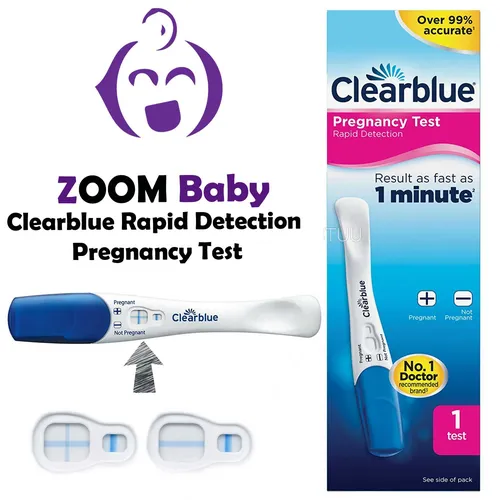
Ready to test? Get accurate, reliable pregnancy tests delivered quickly to your door. Our tests are trusted by thousands of UK customers and offer excellent value without compromising on quality.
What Customers Say
“I am astonished to see an extremely faint positive at 9DPO! Will be using the rest of the tests to double check!”
— Michelle H, Verified Customer
“Ordered these pregnancy tests on Thursday at 3.30pm and was pleased to see them arrive in the post the following morning. Tests are supplied with clear, English instructions and testing was simple. Thank you Zoom Baby!”
— Steph, Verified Customer
“Thanks so much for the ovulation kits – after just one month of using them I’m now pregnant!! I took 3 out of the 4 pregnancy tests I got from you as I couldn’t believe my eyes!! Would highly recommend these tests, they work!!”
— K.L., Verified Customer
In Conclusion
Understanding when a pregnancy test will read positive depends on several factors: implantation timing, test sensitivity, and when you choose to test. While tests become increasingly accurate after a missed period, early detection tests can provide results several days before your expected period.
For the most reliable results, test with first morning urine and use a sensitive test. If you get a negative result but suspect pregnancy, wait a few days and test again. Remember, patience is key – testing too early can lead to false negatives and unnecessary worry.
About the Author
Anthony Cunningham – Fertility Testing Expert & Editor
Anthony Cunningham, BA (Hons), MA, is a UK-based fertility testing expert and editor with over 20 years’ experience running Zoom Baby, a trusted source for accurate pregnancy, ovulation and fertility tests and testing guidance. He creates clear, evidence-based articles using NHS guidance, professional fertility resources, and conception planning best practices. Where possible, content is reviewed by fertility specialists and healthcare professionals to enhance accuracy and reliability, helping readers make informed testing decisions.
You May Also Like:
When Is the Best Time to Take a Pregnancy Test?
Discover the optimal timing for pregnancy testing to get the most accurate results and avoid false negatives.
What Are the Best Early Pregnancy Tests?
Compare the most sensitive pregnancy tests available and find out which ones can detect pregnancy earliest.
False Negative Pregnancy Tests: 5 Things That Could Be Wrong
Understand why pregnancy tests can show negative results even when you’re pregnant and what to do about it.
Am I Pregnant? – 10 Early Signs of Pregnancy
Learn to recognise the early symptoms of pregnancy before you even take a test.



Zoom Baby is a leading supplier of Pregnancy Tests and Ovulation Test Kits