

About This Article: Zoom Baby has supplied pregnancy, ovulation and fertility tests to UK customers for nearly 20 years. This guide draws on our experience helping thousands of people understand fertility testing, conception planning, and pregnancy nutrition. Always consult healthcare professionals for medical advice regarding conception and pregnancy.
Published: 7 December 2023 | Last Updated: 18 March 2026 | By Anthony Cunningham
In This Article
Vitamin D is one of the most talked-about nutrients in pregnancy — and for good reason. It plays a vital role in fetal bone development, supports your immune system, and helps your body absorb calcium effectively. Yet despite its importance, Vitamin D deficiency is strikingly common across the UK, affecting pregnant and non-pregnant women alike. If you are planning a pregnancy or are already expecting, understanding your Vitamin D needs is an important step you should not overlook.
Why Vitamin D Matters in Pregnancy
Vitamin D is a fat-soluble nutrient that your body produces naturally when your skin is exposed to sunlight. It is unique among vitamins in that your diet alone is rarely sufficient to meet your needs, particularly in a country like the UK where sunlight is limited for much of the year.
During pregnancy, Vitamin D has several essential functions. It enables your body to absorb and use calcium, which is crucial for building your baby’s bones and teeth. It also supports healthy muscle function, immune regulation, and cell division throughout pregnancy. Research published in peer-reviewed journals has linked adequate Vitamin D levels to reduced risks of complications including gestational diabetes, preterm birth, and low birth weight.
If you are also taking folic acid before and during pregnancy, you are already on the right track — but Vitamin D is equally important and is sometimes overlooked.
How Common Is Vitamin D Deficiency in the UK?
Vitamin D deficiency affects an estimated one in five adults in the UK, with rates even higher among pregnant women and those with darker skin tones. The NHS recommends that all adults in the UK — including pregnant and breastfeeding women — consider taking a daily Vitamin D supplement, particularly between October and March when sunlight levels are too low for the skin to produce adequate amounts.
There are several reasons why deficiency is so widespread. Vitamin D production depends on direct sunlight exposure to the skin, without sunscreen or covering clothing. Factors such as living at a northerly latitude, spending most of your day indoors, having darker skin, or carrying excess body weight can all significantly reduce the amount of Vitamin D your body is able to produce from sunlight.
Diet alone provides only a small contribution. Very few foods naturally contain meaningful levels of Vitamin D. Oily fish such as salmon, mackerel, and sardines are among the best sources, along with egg yolks and some fortified foods like breakfast cereals and dairy alternatives. However, most people in the UK do not eat enough of these to meet their daily requirements.
Foods That Contain Vitamin D
- Oily fish (salmon, mackerel, sardines, herring)
- Egg yolks
- Red meat and liver (in moderation during pregnancy)
- Fortified breakfast cereals
- Fortified dairy products and plant-based milk alternatives
- Some mushrooms (when exposed to UV light)
The Risks of Vitamin D Deficiency During Pregnancy
For pregnant women, Vitamin D deficiency carries risks for both mother and baby. Because Vitamin D crosses the placenta, a mother who is deficient cannot provide adequate levels to her developing baby, regardless of how well-formed the pregnancy may otherwise be.
The most well-established consequence for newborns is rickets, a condition that causes soft, weakened bones and abnormal skeletal development. Though rickets was once considered a disease of the past, it has seen a resurgence in the UK in recent years, closely linked to widespread Vitamin D deficiency. According to RCOG guidance on vitamins and supplements in pregnancy, deficiency has also been associated with a higher risk of preeclampsia, gestational diabetes, and increased susceptibility to infections in newborns.
For the mother herself, severe deficiency can cause bone pain, muscle weakness, and fatigue — all of which can be difficult to distinguish from the normal discomforts of pregnancy. Getting tested if you have concerns is straightforward. A home test kit for Vitamin D deficiency can give you a clear picture of your current levels before you speak to your GP.
How Much Vitamin D Do You Need When Pregnant?
The NHS advises that pregnant and breastfeeding women take a daily supplement containing 10 micrograms (400 IU) of Vitamin D. However, many healthcare professionals and leading bodies including RCOG suggest that this baseline recommendation may be insufficient for women who are already deficient or who have additional risk factors.
Many fertility and pregnancy supplements contain Vitamin D levels above the basic NHS threshold. For example, Pregnacare Conception contains 800 IU of Vitamin D3 — double the standard NHS guidance — reflecting the view that a higher intake before and during early pregnancy is appropriate for many women. Most sources consider up to 2,000 IU per day to be safe during pregnancy, though you should discuss your personal needs with your GP or midwife, particularly if you suspect you are already deficient.
If you are considering what to eat when trying to get pregnant, Vitamin D-rich foods should be a regular part of your diet alongside supplementation.
How to Get Enough Vitamin D
There are three main ways to obtain Vitamin D: sunlight, diet, and supplements. During summer months (approximately April to September in the UK), short periods of sun exposure to the arms and legs without sunscreen — around 10 to 20 minutes a day at midday — can be enough to maintain adequate levels for most lighter-skinned people. Those with darker skin tones may need significantly longer exposure to produce the same amount.
Between October and March, however, the sun in the UK is not strong enough for the skin to produce meaningful Vitamin D at all. During these months, you need to rely entirely on dietary sources and supplements. Given how difficult it is to get sufficient Vitamin D from food alone, supplementation is recommended for virtually everyone in the UK during the autumn and winter — and year-round for pregnant women.
Quick Tip: If you are trying to conceive or are in the early weeks of pregnancy, now is a good time to review your supplement routine. A good-quality conception supplement will usually cover your Vitamin D needs alongside folic acid, iron, and other key nutrients needed in the preconception period.
Choosing the Right Vitamin D Supplement
When selecting a Vitamin D supplement, the form of Vitamin D matters. There are two main types available:
- Vitamin D3 (cholecalciferol) — derived from animal sources, this is the most potent and effective form. It is the same type your body makes from sunlight, and studies consistently show it raises blood Vitamin D levels more effectively than D2.
- Vitamin D2 (ergocalciferol) — derived from plant sources such as fungi, this is suitable for vegans and vegetarians. It is somewhat less potent than D3 but is still effective, particularly at higher doses.
For most pregnant women, a dedicated preconception or pregnancy multivitamin is the most practical approach, as it combines Vitamin D with other essential nutrients including folic acid, iron, iodine, and calcium. This avoids the need to take multiple separate supplements and reduces the risk of exceeding safe upper limits for individual nutrients.
Many women trying to conceive also find it helpful to read up on pregnancy and prenatal vitamins to understand what to look for before making their choice.
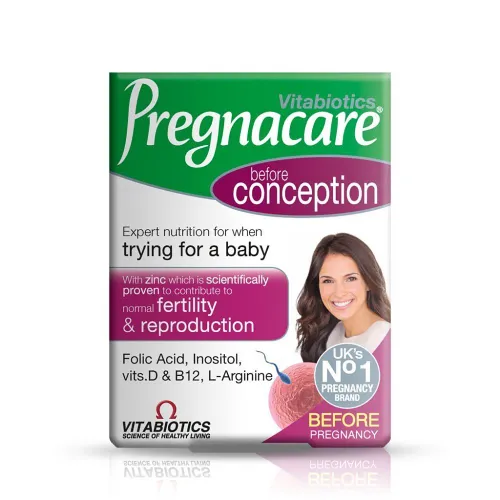
Support Your Vitamin D Needs Before Conception. Pregnacare Before Conception contains 800 IU of Vitamin D3 alongside folic acid, iron, iodine, and other key nutrients formulated for women planning a pregnancy. Available from Zoom Baby with fast UK delivery.
What Customers Say
Here is what some of our customers have shared about Pregnacare Conception from Zoom Baby:
“It might just be a coincidence but I got pregnant just a few weeks after I started using Pregnacare Conception. So it’s a 5 Star review from me!”
Carmel — ★★★★★ Verified Buyer
“Bought this at the same time as buying Pregnacare Conception. My husband has been taking the tablets every day for a week now, so fingers crossed it will help us in getting pregnant.”
Janie W — ★★★★ Verified Buyer
“Also interested to see how I get along with the fertility vitamins. I must admit that I never knew such a product existed. The pills seem nice and small which is a bonus as I hate swallowing tablets!”
Helen J — ★★★★ Verified Buyer
In Conclusion
Vitamin D is one of the most important nutrients to get right during pregnancy, yet it remains one of the most commonly deficient in the UK. Given that our climate limits sunlight-based Vitamin D production for half the year, and that dietary sources alone are rarely sufficient, supplementation is the most reliable way to ensure you and your baby have what you need.
Whether you are planning a pregnancy or already expecting, now is a good time to review your Vitamin D intake. Speak to your GP or midwife about testing if you have concerns, and look for a high-quality preconception or pregnancy supplement that includes Vitamin D3 alongside folic acid and other key nutrients. Getting this right before conception — and throughout pregnancy — gives your baby the best possible start.
You might also find it helpful to read our guides on simple ways to improve your fertility and on whether Pregnacare Conception can improve your chances of pregnancy.
About the Author
Anthony Cunningham – Fertility Testing Expert & Editor
Anthony Cunningham, BA (Hons), MA, is a UK-based fertility testing expert and editor with over 20 years’ experience running Zoom Baby, a trusted source for accurate pregnancy, ovulation and fertility tests and testing guidance. He creates clear, evidence-based articles using NHS guidance, professional fertility resources, and conception planning best practices. Where possible, content is reviewed by fertility specialists and healthcare professionals to enhance accuracy and reliability, helping readers make informed testing decisions.
You May Also Like:



Zoom Baby is a leading supplier of Pregnancy Tests and Ovulation Test Kits.