About This Article
Zoom Baby has more than 20 years’ experience helping people understand pregnancy, ovulation and fertility testing. This article looks at the development of SaliStick, the world’s first saliva-based pregnancy test, from its original announcement in 2022 to its subsequent launch in the UK and expansion into other European markets.
Originally published: 10 November 2022 | Updated: 7 October 2026 | By: Anthony Cunningham
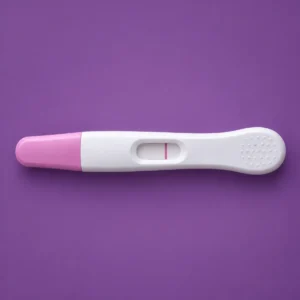
When we first wrote about SaliStick in November 2022, the idea of taking a pregnancy test using saliva rather than urine was still something new. Israeli diagnostics company Salignostics had developed what it described as the world’s first saliva-based pregnancy test, with a UK launch expected during 2023.
That launch went ahead, and saliva pregnancy testing has since moved from an interesting new technology to a commercially available alternative to conventional urine pregnancy tests.
What Is SaliStick?
SaliStick was developed by Salignostics using technology designed to detect the pregnancy hormone human chorionic gonadotrophin (hCG) in saliva rather than urine.
The principle is therefore similar to a conventional pregnancy test. Both are looking for hCG, a hormone that begins to be produced following implantation in early pregnancy. The significant difference is the sample being tested.
With SaliStick, saliva is collected using an absorbent collection swab held in the mouth. The collector is then connected to the test unit, where the sample is analysed and the result displayed.
This removes the need to collect or test urine, making it possible to carry out a pregnancy test in situations where using a conventional urine test may be less convenient.
Did the Saliva Pregnancy Test Actually Launch?
Yes. When this article was originally published in November 2022, Salignostics expected SaliStick to become available during 2023.
The first UK commercial launch took place in June 2023. Abingdon Health, Salignostics’ UK and Ireland distributor, launched SaliStick through 400 Superdrug stores and the Superdrug website.
Distribution expanded quickly. In August 2023, Tesco announced that it would introduce SaliStick into 298 larger stores as well as selling the test online.
Another significant development followed in 2024 when Boots launched a saliva pregnancy self-test under its own brand. The test was supplied through a partnership involving Abingdon Health, Salignostics and Crest Medical.
The technology has also moved beyond the UK. In March 2025, Abingdon Health announced an extension of its distribution agreement with Salignostics covering European markets including Germany, Poland and Austria.
How Does a Saliva Pregnancy Test Work?
SaliStick uses a saliva sample rather than urine. According to the manufacturer’s instructions, saliva is collected in the mouth using the supplied collection component before it is connected to the analytical unit.
The test detects hCG in the saliva. A control line is used to show that the test has operated correctly, while the appearance of the appropriate test line indicates that hCG has been detected.
It is important to follow the instructions supplied with the particular test. Factors such as how the saliva sample is collected and when the result is read can affect whether the test has been performed correctly.
How Long Does a Saliva Pregnancy Test Take?
The original SaliStick instructions state that the result should appear within approximately 4 to 10 minutes. Retail versions and instructions may vary, so always follow the timings supplied with the test you are using rather than relying on a general timing.
As with any pregnancy test, a result should not be interpreted after the manufacturer’s stated reading window.
When Can You Use a Saliva Pregnancy Test?
The timing of pregnancy testing matters because hCG levels increase during early pregnancy. Testing too soon can mean there is not yet enough hCG present for the test to detect.
The NHS advises that most pregnancy tests are most reliable from the first day of a missed period. If you do not know when your next period is due, NHS guidance recommends testing at least 21 days after the last time you had unprotected sex.
The instructions supplied with your particular saliva pregnancy test should always take priority, as the sensitivity and recommended testing time can differ between products.
Are Saliva Tests Better Than Urine Pregnancy Tests?
Not necessarily. The main advantage of a saliva test is convenience rather than the fact that saliva is inherently a better way to detect pregnancy.
Traditional home pregnancy tests are well established, widely available and straightforward to use. The NHS states that home pregnancy tests are accurate when their instructions are followed correctly.
A saliva test offers another option. There is no urine sample to collect, and the test may therefore be easier to use away from home or where greater flexibility and privacy are important.
For some people that may make saliva testing attractive. Others may prefer the familiarity, price or availability of a conventional urine pregnancy test.
What If the Result Is Negative?
A negative pregnancy test does not always rule out pregnancy, particularly if you test very early.
If you receive a negative result but still think you may be pregnant, the NHS advises waiting a few days and testing again. If a second test is negative and your period has still not arrived, speak to your GP or another healthcare professional.
A positive home pregnancy test is almost certainly correct when the test has been used according to its instructions. If you intend to continue with the pregnancy, you can then contact the NHS to begin your pregnancy care.
Saliva Pregnancy Testing: From New Idea to Real Product
Looking back at our original 2022 article, the interesting part of the SaliStick story is that the promised product did make the transition from development to the shelves.
What was then being described as a pregnancy test that would be available “early next year” subsequently launched in major UK retailers and provided consumers with a genuinely different way to test for pregnancy.
It has not replaced the familiar urine pregnancy test, but it has demonstrated that urine does not have to be the only practical sample for home pregnancy testing. For anyone choosing between the two formats, the important considerations remain when the test can be used, how carefully its instructions are followed and how a negative result is handled if pregnancy is still suspected.
About the Author
Anthony Cunningham, BA (Hons), MA, is a UK-based fertility testing expert and editor with over 20 years’ experience running Zoom Baby, a trusted source for accurate pregnancy, ovulation and fertility tests and testing guidance. He creates clear, evidence-based articles using NHS guidance, professional fertility resources, and conception planning best practices. Where possible, content is reviewed by fertility specialists and healthcare professionals to enhance accuracy and reliability, helping readers make informed testing decisions.
Medical Disclaimer
This article is for general information only and is not a substitute for professional medical advice, diagnosis or treatment. If you have concerns about your health or symptoms, speak to your GP or another qualified healthcare professional. In an emergency, seek urgent medical help.