

About This Article
Zoom Baby has supplied pregnancy, ovulation and fertility tests to UK customers for nearly 20 years. This guide draws on our experience helping thousands of people understand fertility testing, conception planning, and early pregnancy symptoms. Always consult healthcare professionals for medical advice regarding conception and pregnancy.
Published: October 2018 | Last Updated: December 30, 2025 | By Anthony Cunningham
Wondering If You’re Pregnant? Check Out Our Guideline for The “Two-Week Wait”
The period of time between when you ovulate and experience a period or ‘missed period’ or discover through a positive pregnancy test that you’ve conceived, is often referred to as the “two-week-wait”. And, any couple trying to conceive will confirm just how frustrating and nerve-racking the “two-week-wait” period can be!
The “two-week” part of this term refers to the luteal phase of the menstrual cycle that covers ovulation right through to the end of the menstrual cycle, while the word “waiting” refers to the hope and anticipation of discovering if you’re pregnant — or not.
For those women who use ovulation prediction devices or who are BBT charting, the two-week-wait period can be determined by either a positive on a fertility monitor or ovulation test or BBT temperature surge. So, assuming your lovemaking has been timed correctly, your two-week wait begins. Below we’ve attempted to describe just what you can expect during this stressful period of time.
In This Guide:
- It May Feel like The Beginning of Your Period
- You May Experience Implantation Bleeding
- Act as If You’re Pregnant
- Don’t Stop Regular Physical Activity
- Seek Medical Advice If You Get Your Period Early
- Start Taking a Daily Pre-Natal Vitamin
- Additional Tips for Surviving The Two Week Wait
- Nurturing Your Emotional Well-Being
- Start Early Pregnancy Testing
No. 1: It May Feel like The Beginning of Your Period
Isn’t it interesting (and frustrating!) that the early signs of pregnancy and PMS are almost identical! Why does this happen?
The reason is, whether you’re pregnant or not, more progesterone is produced the week after ovulation. The hormone progesterone is responsible for many of the symptoms of PMS, like mood swings, breast tenderness, and bloating. If, in fact, you’re not pregnant, you’ll cease releasing progesterone approximately 10 days following ovulation. As progesterone levels reduce, so too will your symptoms; the lining of the uterus will slough off and you’ll get your period.
However, you’ll continue producing progesterone if you are in fact pregnant, and you’ll continue experiencing PMS-like symptoms. The NHS notes that early pregnancy symptoms can be very similar to premenstrual symptoms. It should be noted that there are only very subtle differences between PMS and early pregnancy.
No. 2: You May Experience Implantation Bleeding, Which Is Not Your Period
In approximately 30% of pregnancies women experience implantation bleeding, which is often mistaken as being a period. This occurs when the fertilised egg attaches itself to the lining of the uterus, which typically occurs around the time that you expect your period — sometimes a few days earlier.
Similar to a period, this can cause mild cramping and bleeding, but note that there are some distinctions. When compared to a period, implantation bleeding tends to be shorter in duration and significantly lighter. And, you’ll typically experience spotting instead of full days of flow. You may also notice that, instead of being a red colour, the bleeding may be light brown or black.
Implantation typically occurs 6-12 days after ovulation, when the embryo embeds into the uterine wall. According to Tommy’s pregnancy charity, implantation bleeding is usually very light pink or brown spotting that lasts a day or two at most. However, don’t be concerned if you don’t experience implantation bleeding because it is also very common to enjoy a healthy pregnancy without it.
No. 3: You Should Act as If You’re Pregnant, Even Though It’s Not Yet Confirmed
Statistics show that, depending on your age, there’s a 15% to 25% chance each month you’ll become pregnant. It’s very important that, until such time as it’s confirmed you’re not pregnant, you act as if you are pregnant, until you receive confirmation one way or the other.
Because you could be pregnant you should limit your coffee drinking to 1 or 2 cups per day, avoid alcohol, avoid fish high in mercury, and raw and undercooked seafood, poultry, eggs, and meat. The NHS recommends making these lifestyle changes as soon as you start trying to conceive.
No. 4: Don’t Stop Engaging in Regular Physical Activity
We know that exercise is a great stress reliever and we also know that stress affects fertility, so don’t stop engaging in moderate intensity physical activity. That being said, this is not the right time to begin a new training programme because this could place additional stress on your nervous system.
Activities that significantly raise your core body temperature (like heated spinning and hot yoga), could well affect implantation. Moderate exercise such as walking, swimming, and gentle yoga are generally safe and beneficial during the two week wait.
No. 5: Seek Medical Advice If You Get Your Period Less Than 14 Days Following Ovulation
Getting your period less than 14 days after ovulation could well mean something is affecting your ability to become pregnant. This doesn’t necessarily mean the end of your pregnancy: it could be that you simply miscalculated ovulation or you may have a condition known as Luteal Phase Defect.
Luteal Phase Defect (also called Luteal Phase Insufficiency) means that your body isn’t currently producing enough progesterone to maintain pregnancy. The luteal phase should typically last between 12-16 days, with 14 days being average. A consistently short luteal phase (less than 10 days) may indicate a hormonal imbalance that could affect your ability to conceive or maintain early pregnancy.
Your medical practitioner might prescribe additional progesterone to assist in lengthening your luteal phase. If you notice a pattern of short cycles or repeatedly getting your period despite a negative pregnancy test, it’s worth discussing with your GP or fertility specialist.
No. 6: If You’re Not Already Taking a Daily Pre-Natal Vitamin, Start Taking One Today
The truth is that, even before the two-week-wait, you should be taking a daily prenatal vitamin containing between 400 and 800 micrograms of folic acid.
Your baby’s neural tube develops during the first four weeks of pregnancy, and folic acid is important for preventing neural tube defects. As baby develops, the neural tube becomes its brain and spinal cord, so you can see how important it is that the mother takes folic acid on a regular basis. The NHS recommends taking 400 micrograms of folic acid daily from when you start trying to conceive until you’re 12 weeks pregnant.
Additional Tips for Surviving The Two Week Wait
The two week wait between ovulation and when you can take a pregnancy test can feel like an eternity. Here are some additional tips to help you stay sane:
Track your symptoms — Use an app or journal to track any symptoms you experience like fatigue, tender breasts, cramps, etc. This can help pinpoint patterns and identify possible early signs of pregnancy. But don’t overanalyse every twinge! Some variability is normal.
Find healthy distractions — Binge-watch a funny TV series, read an engrossing novel, cook comfort foods — whatever takes your mind off constant wondering. Pursuing hobbies and self-care can make the time pass quicker.
Avoid pregnancy test addiction — It’s tempting to take test after test, hoping for an early positive. But inaccurate results and uncertainty can make the two week wait even more stressful. Understanding when is the best time to take a pregnancy test can help you avoid testing too early and getting disappointing results.
Don’t panic over every cramp or spot — It’s common to feel slight cramping or spotting in early pregnancy as the embryo implants and your body adjusts. Unless severe, don’t assume the worst. But do contact your doctor if very concerned.
Rally your support network — Lean on your partner, close friends and family during this uncertain period. Share your fears and frustrations instead of bottling up emotions. Your loved ones can provide a listening ear.
Visualise the future — Picture yourself happily pregnant or holding your baby. Envisioning this will help you look past the two week wait to the ultimate goal — a healthy pregnancy and child.
Pamper yourself — Do relaxing activities like getting a massage, taking a bubble bath, or meditating. Taking extra good care of yourself can provide comfort during the stressful two week wait period.
Staying busy, distracting yourself, and taking special care of your needs can help you stay positive and avoid obsessing constantly about pregnancy signs during the two week wait. The key is patience and self-care!
Nurturing Your Emotional Well-Being During The Two Week Wait
Let’s face it – the two week wait can be an emotional rollercoaster. One minute you’re brimming with hope, the next you’re plunging into doubt. It’s crucial to nurture your emotional well-being during this time. Try journaling to express your feelings – it’s like a pressure release valve for your emotions. Or why not create a “hope box”? Fill it with positive affirmations, mementos that make you smile, and little treats to enjoy. When anxiety creeps in, open your box and let it lift your spirits.
Remember, it’s okay to feel however you feel. There’s no “right” way to navigate this wait. Some days you might want to shout your hopes from the rooftops, other days you might need to curl up with a good book and escape for a while. Listen to your body and honour your needs. And don’t forget – your partner’s going through this too. Check in with each other, share a laugh, or just sit in comfortable silence. You’re in this together, after all!
Why Not Start Now and Take an Early Pregnancy Test?
Testing for pregnancy can begin roughly 10 days past ovulation, so early pregnancy testing can help reduce the stressful waiting period. On average, the implantation of a fertilised egg takes around one week, and with implantation comes the production of the hCG hormone. This means that you can begin testing without having to wait for a missed period.
If you’re wondering what are the best early pregnancy tests, look for those with high sensitivity (10-25 mIU/ml) that can detect lower levels of hCG. Many women also find it helpful to understand the early signs of pregnancy so they know what to look out for during the two week wait.
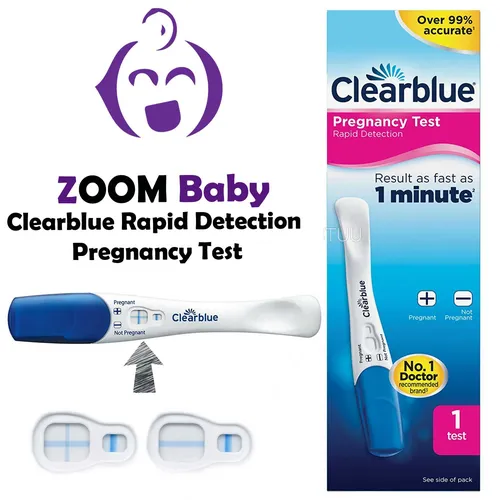
Ready to test? Our pregnancy tests provide accurate, reliable results from as early as 10 days past ovulation. With fast, free delivery and discreet packaging, you can test with confidence during your two week wait.
What Customers Say
“After 2 months of using the ovulation kits I got the chance to use one of the pregnancy testing strips and I’m pleased to say it was positive! I’m now 16 weeks pregnant and am sure we would still be trying to conceive had I not used your products. Thank you Zoom Baby.”
– Tina W. ⭐⭐⭐⭐⭐
“Thanks so much for the ovulation kits – after just one month of using them I’m now pregnant!! I took 3 out of the 4 pregnancy tests I got from you as I couldn’t believe my eyes!!! Would highly recommend these tests, they work!!”
– K.L. ⭐⭐⭐⭐⭐
“I used these ovulation tests in 2009 and conceived the first month of trying, confirmed by the free pregnancy test that came with it. I couldn’t believe the pregnancy test could be accurate as they look so flimsy compared to the expensive ones you buy in the shop – so I bought a ‘proper’ one which only confirmed what the free test had told me.”
– Laura R. ⭐⭐⭐⭐⭐
In Conclusion
The two week wait is one of the most challenging parts of trying to conceive, but understanding what’s happening in your body during this time can help you navigate it with greater confidence. Remember that every woman’s experience is different, and whether you’re dealing with implantation bleeding, PMS-like symptoms, or anxiously counting down the days, your feelings are completely valid.
By taking care of yourself physically and emotionally, staying informed about early pregnancy signs, and knowing when to test, you can make this waiting period more manageable. And remember, whether this cycle results in pregnancy or not, each month brings you one step closer to understanding your body and optimising your chances of conception.
Photo credit: “Am I?” by Anthony Cunningham for Zoom Baby
About the Author
Anthony Cunningham – Fertility Testing Expert & Editor
Anthony Cunningham, BA (Hons), MA, is a UK-based fertility testing expert and editor with over 20 years’ experience running Zoom Baby, a trusted source for accurate pregnancy, ovulation and fertility tests and testing guidance. He creates clear, evidence-based articles using NHS guidance, professional fertility resources, and conception planning best practices. Where possible, content is reviewed by fertility specialists and healthcare professionals to enhance accuracy and reliability, helping readers make informed testing decisions.
You May Also Like:
When Is the Best Time to Take a Pregnancy Test?
Understanding optimal testing timing can help you get accurate results and avoid the disappointment of testing too early during your two week wait.
Am I Pregnant? – 10 Early Signs of Pregnancy
Learn the most common early pregnancy symptoms to watch for during the two week wait, from implantation bleeding to breast tenderness.
False Negative Pregnancy Tests: 5 Things That Could Be Wrong
Got a negative result but think you might still be pregnant? Discover the common reasons why pregnancy tests can give false negatives.
What are the Best Early Pregnancy Tests?
Compare the most sensitive early pregnancy tests available and find out which ones can detect pregnancy earliest during your two week wait.



Zoom Baby is a leading supplier of Pregnancy Tests and Ovulation Test Kits.