About This Article
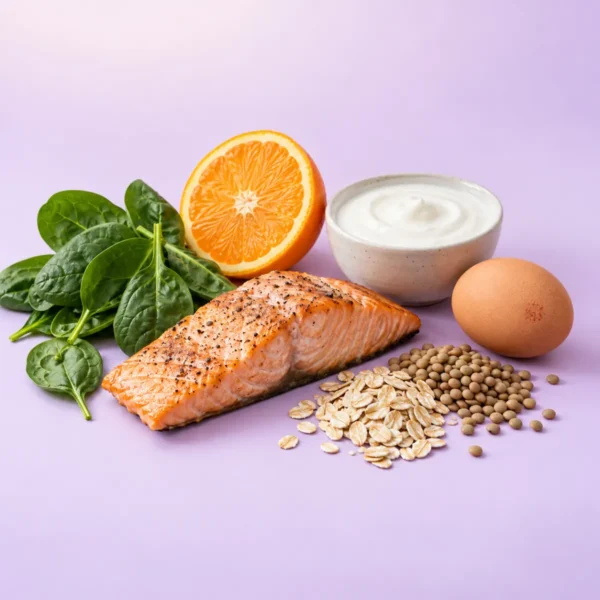
Zoom Baby has more than 20 years’ experience providing pregnancy, ovulation and fertility products and guidance. This article explains how salmon, fruit, eggs, lean proteins, leafy vegetables, wholegrains and dairy can contribute to a varied diet during pregnancy.
Published: 24 May 2024 | Last Updated: 10 September 2026 | By: Anthony Cunningham
Pregnancy can make you look at your diet more carefully than usual. Avoiding alcohol, limiting caffeine and checking that food is safe are all important, but you do not need a special or perfect diet.
Most people can get the nutrients they need by eating a varied, balanced diet alongside the recommended pregnancy supplements. Favourite foods such as chocolate can still be enjoyed occasionally and in sensible amounts.
Contents
- Salmon
- Oranges and Other Fruit
- Eggs
- Lean Meat and Other Proteins
- Choline
- Dark Leafy Greens
- Wholegrains
- Dairy Products
- Staying Hydrated
- Pregnancy Supplements
Salmon
Fish provides protein and important nutrients, including omega-3 fatty acids. The NHS recommends eating two portions of fish each week during pregnancy, including one portion of oily fish such as salmon, sardines or mackerel. You should not eat more than two portions of oily fish a week because it can contain pollutants.
Salmon does not have to be wild Alaskan salmon to be suitable. Fresh, frozen and tinned salmon can all form part of a balanced pregnancy diet when stored, prepared and cooked safely. Avoid raw fish, and cook cold-smoked or cured fish until it is steaming hot. Shark, swordfish and marlin should be avoided. Tuna should be limited to no more than four cans or two tuna steaks a week. The NHS maintains a detailed list of foods to avoid or limit during pregnancy.
Oranges and Other Fruit
Oranges provide vitamin C and folate, while fruit and vegetables supply a range of vitamins, minerals and fibre. Aim for at least five portions of varied fruit and vegetables each day and wash fresh produce carefully before eating it.
Folate from food is valuable, but it does not replace a folic acid supplement. Most women are advised to take 400 micrograms of folic acid every day while trying to conceive and until they are 12 weeks pregnant. Folic acid reduces the risk of neural tube defects such as spina bifida. Some women are prescribed a higher 5mg dose because of their medical history or medicines, so ask a GP, midwife or pharmacist if you are unsure which dose you need.
Eggs
Eggs provide protein and nutrients including vitamin B12, vitamin D and choline. British Lion hen eggs and eggs produced under the Laid in Britain scheme can be eaten raw, runny or thoroughly cooked during pregnancy, provided they are within their use-by date. Other hen eggs should be cooked until both the white and yolk are firm, and duck, goose and quail eggs should always be thoroughly cooked.
Lean Meat and Other Proteins
Lean meat such as chicken and turkey provides protein, iron and other nutrients. Remove the skin from poultry if you want to reduce saturated fat, and make sure poultry, burgers, sausages and rolled joints are cooked thoroughly until steaming hot with no pink meat.
Beans, lentils, chickpeas, tofu, nuts, eggs and fish are useful alternatives, helping to provide variety across the week. Avoid liver and liver products during pregnancy because they contain high levels of vitamin A, which can harm an unborn baby.
Choline
Choline contributes to normal cell function and is important during development. Eggs, meat, fish, dairy products, soya beans and some nuts and seeds provide choline. Research continues into the precise amount needed during pregnancy, so include a variety of choline-containing foods rather than relying on a single food or supplement.
Dark Leafy Greens
Dark leafy vegetables such as spinach, kale and rocket provide folate, fibre and iron. Iron is needed to make red blood cells, and low iron levels can contribute to anaemia, tiredness and weakness during pregnancy.
Iron from plant foods is absorbed less readily than iron from meat. Eating a vitamin C-rich food alongside it can help absorption. Speak to your midwife or GP if you are unusually tired, short of breath or concerned about anaemia rather than starting a high-dose iron supplement yourself.
Wholegrains
Starchy foods provide energy, vitamins and fibre. Wholegrain and higher-fibre choices such as wholemeal bread, brown rice, porridge oats, wholewheat pasta and quinoa can also help prevent constipation, which is common during pregnancy.
You do not need to choose a wholegrain option at every meal. Aim for a varied diet and try to achieve a sensible balance over the course of a week.
Dairy Products
Milk, cheese and yoghurt provide calcium and other nutrients needed by you and your developing baby. Choose pasteurised products and check labels carefully. Unsweetened, calcium-fortified dairy alternatives can also contribute to calcium intake.
Some mould-ripened soft cheeses and soft blue cheeses should only be eaten when cooked until steaming hot, while unpasteurised milk and products made from it should be avoided. Yoghurt should not be relied upon to prevent or treat thrush or other infections.
Staying Hydrated
Drink regularly during pregnancy and increase your fluid intake in hot weather or when physically active. Pale yellow urine is usually a practical sign that you are drinking enough. Water and milk are suitable choices, and fruit juice or smoothies should be limited to a combined total of 150ml a day.
Keep caffeine below 200mg a day from all sources, including coffee, tea, cola, energy drinks and chocolate. Herbal teas are not automatically safe during pregnancy. The NHS advises no more than four cups of herbal tea a day and recommends avoiding teas containing liquorice root.
Pregnancy Supplements
A varied diet is the foundation of pregnancy nutrition, but the NHS recommends specific supplements. Most women should take 400 micrograms of folic acid each day before conception and through the first 12 weeks of pregnancy, together with 10 micrograms of vitamin D each day throughout pregnancy.
A pregnancy multivitamin can be a convenient way to obtain these nutrients, but check that it is formulated specifically for pregnancy. Avoid supplements containing vitamin A as retinol and do not take high-dose vitamins or minerals unless advised by a GP, midwife or pharmacist. Our guide to pregnancy and prenatal vitamins explains what to look for.

Featured Product: Pregnacare Original
Pregnacare Original provides 400 micrograms of folic acid and 10 micrograms of vitamin D alongside a range of other vitamins and minerals. It is intended to complement, not replace, a varied and balanced diet.
You do not need to feel guilty about an occasional treat. Foods high in fat or sugar are best eaten less often and in small amounts, but a healthy pregnancy diet is about the overall balance rather than making every meal perfect. If sickness, allergies, a restricted diet or another health condition makes eating difficult, ask your midwife, GP or dietitian for individual advice.
About the Author
Anthony Cunningham, BA (Hons), MA, is a UK-based fertility testing expert and editor with over 20 years’ experience running Zoom Baby, a trusted source for accurate pregnancy, ovulation and fertility tests and testing guidance. He creates clear, evidence-based articles using NHS guidance, professional fertility resources, and conception planning best practices. Where possible, content is reviewed by fertility specialists and healthcare professionals to enhance accuracy and reliability, helping readers make informed testing decisions.
Medical Disclaimer
This article is for general information only and is not a substitute for professional medical advice, diagnosis or treatment. If you have concerns about your health or symptoms, speak to your GP or another qualified healthcare professional. In an emergency, seek urgent medical help.