

About This Article
Zoom Baby has supplied pregnancy, ovulation and fertility tests to UK customers for nearly 20 years. This guide draws on our experience helping thousands of people understand pregnancy testing, conception planning, and getting accurate test results. Always consult healthcare professionals for medical advice regarding conception and pregnancy.
Published: December 5, 2019 | Last Updated: December 31, 2025 | By Anthony Cunningham
Pregnancy testing can be a very stressful time for women and their partners, so we’ve compiled our list of 25 Best Pregnancy Test Tips for women starting the testing process.
Table of Contents
- Do Your Own Research on Pregnancy Tests
- Test First Thing in the Morning
- Don’t Ignore the Instructions
- Accuracy Is All About Timing
- Place Test in Appropriate Position
- Avoid Foods Containing Colouring Agents
- Don’t Stop at Just One Test
- Read Instructions for Midstream Tests
- Testing Strip Must Not Touch the Cup
- Don’t Start With a Digital Test
- Use a New, Dry, Disposable Cup
- Store Samples Properly
- Wash With Medicinal Soap If Needed
- Use a Stopwatch
- Don’t Keep Tests in the Refrigerator
- Check the Expiry Date
- Confirm With a Doctor
- Be Aware of Evaporation Lines
- Use Tests With a Handle
- Don’t Touch the hCG Strip
- Don’t Keep Test on Toilet Lid
- Read the Instruction Sheet – Again!
- Consider Taking Two Brands
- Don’t Take Medications Before Testing
- Seek Support If You’re Anxious
No. 1: Do Your Own Research on Pregnancy Tests
There is such a wide range of pregnancy testing kits available on the market today, with each one claiming to be better than the rest. So how do you know which one to choose? Women can certainly be forgiven for being confused about pregnancy testing kits. The answer is that you need to do your own research on all the major brands of pregnancy tests, then according to your comfort level, condition, and budget, select the one that feels right for you.
At Zoom Baby we have pregnancy tests to match every budget. At the economy end, we have pregnancy test strips which offer the most cost-effective way of testing if you are pregnant. For just £2.49 you can get 5 regular pregnancy test strips. For those with a larger budget we offer the big brands such as First Response and Clearblue. These brands offer a wide range of sophisticated devices for home testing.
Generally speaking, a pregnancy test bought online from Zoom Baby will work out cheaper than one you get from the shops or a chemist. When comparing options, it’s worth reading about whether cheap pregnancy tests are reliable to make an informed choice. For example a Boots Pregnancy Test is not the cheapest option available. Even Boots Pregnancy Test Strips are more expensive than online equivalents.
No. 2: Ensure That You Do Your Pregnancy Test First Thing in the Morning
The reason for this is that the urine being tested must be a concentrated sample. Your levels of hCG (chorionic gonadotrophin) will be quite low during the early stages of pregnancy, so ensure that the urine you test is very concentrated, which is typically first thing in the morning. First morning urine is also known as FMU. According to NHS guidance on pregnancy testing, testing with first morning urine provides the most accurate results. We recommend that the morning is the best time to take a pregnancy test.
No. 3: Don’t Ignore the Instructions Inside the Box of Pregnancy Tests
You will notice that there are instructions on the outside of the box of pregnancy testing strips, but these are only general guidelines. Prior to using the pregnancy test strips make sure you read the entire instructional manual insert found inside the box. The detailed instructions inside the box will be more accurate and will vary slightly to other testing strips.
No. 4: The Accuracy of Pregnancy Test Kits Is All About Timing
Timing is everything when it comes to the accuracy of pregnancy testing. Follow the instructions exactly and ensure that the entire testing process is completed within the allotted time. The testing strip must be exposed to your urine, the results allowed to develop, and the test results read within the specified amount of time. Understanding when is the best time to take a pregnancy test can significantly improve accuracy.
No. 5: The Pregnancy Test Should Be Placed on a Clean Counter-top and Placed in the Appropriate Position to Allow the Test to Develop
Follow the instructions carefully and ensure that the pregnancy testing strip is placed in the right position in order to develop. Note that some pregnancy tests require the testing tip to be pointing towards the ground, others work with the upper side facing upwards, and some tests require that the cap be placed on the pregnancy test while it’s developing.
No. 6: Avoid Foods Containing Colouring Agents Before Taking a Pregnancy Test
Did you know that food colour can colour your urine? Foods containing colouring agents, and even naturally coloured foods like beetroot, rhubarb, plums, carrots, and saffron, can colour urine. If you use a pregnancy test strip after eating coloured food, you will notice that there will be colour in the evaporation lines; moreover, the chance of getting a false positive result will be high. For this reason, try to avoid any coloured foods prior to taking a pregnancy test.
No. 7: Don’t Stop at Just One Pregnancy Test
Your body is busy producing hCG at a rapid rate, and every day this amount doubles. This means that, even though you may have had a negative result, you could still be pregnant. This result is known as a false negative and it occurs because your body needs time to generate the hormone hCG. If you’re experiencing symptoms but getting negative results, read about false negative pregnancy tests and 5 things that could be wrong.
No. 8: Carefully Read the Instructions for a ‘midstream’ Pregnancy Test
For a midstream pregnancy test you need to let out the first bit of pee, then use the rest of your pee for the pregnancy test. Ensure that the pregnancy testing stick is placed on a dry, flat surface with the results window facing upwards. Note that a wet pregnancy test strip will not work, so it must be kept completely dry until testing time. Learn more about the best way to take a pregnancy test for optimal results.
No. 9: The Testing Strip Must Not Touch the Cup While Taking a Dip Strip Test
Again, you must read the instructions very carefully. The strip must be dipped into the centre of the cup and only placed at a specific depth. Do not let the strip come into contact with the cup because this will block the capillary action of the hCG strip. The result will be a corrupted test because the urine won’t rise properly.
No.10: Don’t Start the Testing Process Using a Digital Pregnancy Test
We suggest that you take a midstream pregnancy test or a dip strip pregnancy test before you purchase an expensive digital pregnancy test. This way, if you get a negative result then you haven’t wasted money on a digital test.
No. 11: Collect Your Urine Sample in a New, Dry, Disposable Cup
Don’t re-use your sample cups – always use a new disposable cup for collecting your urine sample. This is the only way to ensure that you have a completely contamination-free pregnancy test. Once you’ve used the cup, throw it away.
No. 12: If You’re Going to Test a Urine Sample Later, You’ll Need a Cup With a Lid to Store in Your Refrigerator
Using a cup with a lid will prevent the sample from being contaminated from moisture in the refrigerator, and of course it will prevent spills and other problems. If you don’t like the idea of keeping urine in your refrigerator, simply do the test immediately after taking the urine sample.
No. 13: If You’ve Suffered From Vaginal Infections, Wash Yourself With Medicinal Soap Prior to Testing
Yeast infections and inflammations could well affect the results of your pregnancy test. Prior to testing, wash your vagina with a medicinal soap or other intimate wash to ensure perfect hygiene, which really does play a very important role in the accuracy of pregnancy testing.
No. 14: Use a Stopwatch, Like on Your Mobile Phone, and Set Alarms for Each Stage of the Testing Process
To allow you to place your entire focus on the pregnancy testing procedure, set a stopwatch to beep after each testing stage. Now you can concentrate on what you’re doing! This could minimise your chances of voiding your pregnancy test.
No. 15: Don’t Keep Your Pregnancy Testing Kit in the Refrigerator
Keeping your pregnancy testing kit in the refrigerator will make the testing kit unfit for use. Because there is a lot of moisture in your refrigerator, the hCG strip on the pregnancy testing kit will harden. Again, read the instructions on your testing kit very carefully.
No. 16: Check the Expiry Date on Your Pregnancy Testing Kit
We suggest that, when you purchase a pregnancy testing kit, you check the use-by date to ensure there’s at least six months left until the expiry date. Your pregnancy testing kit is not usable once it’s reached its expiry date. This is because the detector for hCG antibodies have a specific shelf-life and become unusable after their ‘use-by’ date.
No. 17: Doublecheck Your Pregnancy Test Result With a Doctor
Whether you feel like it or not, you do still need a doctor’s appointment to check your pregnancy test result. Remember that the pregnancy testing kit simply detects the pregnancy hormone, but it’s not capable of quantifying the amount of hCG. It definitely is not as accurate as a thorough check-up by your medical practitioner. The NHS recommends confirming pregnancy with your GP or midwife, who can provide proper antenatal care. You owe it to yourself and your baby to ensure you have excellent healthcare support throughout your entire pregnancy.
No. 18: Be Aware of Evaporation Lines on Testing Strips
Evaporation lines occur after urine evaporates from the hCG strip. This is caused by the urine completely drying up, which means that the reading time for your pregnancy test is well and truly over. You must be super vigilant about the reading time because evaporative lines on testing strips can be read as a positive pregnancy test, when it may actually be a false positive result. Don’t set yourself up for this disappointment.
No. 19: Ensure the Pregnancy Testing Strips You Use Have a Handle
Our suggestion is that you use a pregnancy testing strip that has a handle; preferably a grooved handle. Now you can hold the pregnancy test by the tip of the handle, allowing easy movement of the pregnancy test. Testing strips without handles can be very restrictive when you have to hold the entire test kit.
No. 20: Make Sure You Don’t Ever Touch the hCG Strip on Your Pregnancy Test
The most sensitive part of your pregnancy testing kit is the hCG strip. Your hand contains microbes and enzymes, so if you touch this sensitive part of the strip the hCG bodies on the testing strip will be degraded. It’s these detector particles that sense the hCG present in your urine. If your pregnancy testing strip is a supersensitive type, and you ensure you have not touched the hCG strip with your hands, then the strip will be able to detect a low level of hCG, which is exactly what you want to happen.
No. 21: Don’t Keep the Pregnancy Test on the Toilet Lid
The cover on your toilet seat is covered in bacteria, so that’s the last thing you need on your testing strip. The bacteria from the toilet lid will completely ruin the credibility of your test result. Good hygiene is absolutely imperative when using pregnancy testing strips.
No. 22: Read the Instruction Sheet – Again!
We can’t emphasise this enough. You must read and completely understand the instruction insert that comes with your pregnancy testing kit, because each brand is different. Don’t rely on the general instructions on the outside of the box.
No. 23: Consider Taking Two Brands of Pregnancy Tests
While most home pregnancy tests are very accurate, taking two different brands can help confirm your result. Different tests detect pregnancy at different hCG level thresholds, so a positive on one test paired with a negative on another could indicate a very early pregnancy. Alternatively, two positives from different test brands leaves little doubt! For detailed comparisons, see our guide on what are the best early pregnancy tests.
No. 24: Don’t Take Medications Before Testing
Some medications can impact pregnancy test results, leading to false negatives or false positives. If possible, avoid taking medications for a couple days before testing. Common interfering drugs include antibiotics, anti-anxiety meds, antidepressants, and anti-nausea meds. Check with your pharmacist if you take regular prescriptions.
No. 25: Seek Support If You’re Feeling Anxious
A pregnancy test often represents a major fork in the road of life. It’s natural to feel anxious while awaiting the results. The NHS provides support services for anyone needing advice during pregnancy planning. Know that whatever the outcome, there are many professional and personal networks available to provide information and emotional support. You don’t need to go through this alone.
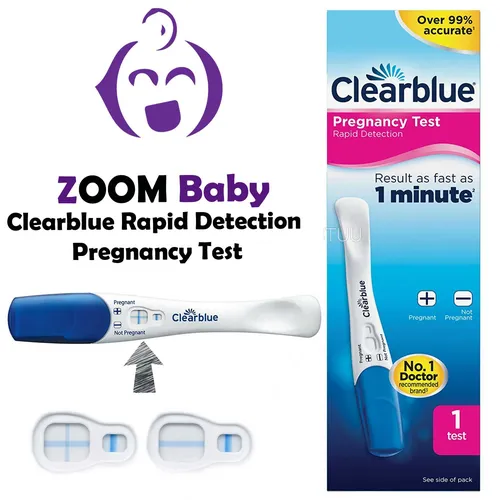
Ready to test? Browse our complete range of pregnancy tests with free delivery options. From budget-friendly test strips to premium digital tests, find the right test for your needs.
What Customers Say
“I used these ovulation tests in 2009 and conceived the first month of trying, confirmed by the free pregnancy test that came with it. I couldn’t believe the pregnancy test could be accurate as they look so flimsy compared to the expensive ones you buy in the shop – so I bought a ‘proper’ one which only confirmed what the free test had told me.”
– Laura R, Verified Customer
“After 2 months of using the ovulation kits I got the chance to use one of the pregnancy testing strips and I’m pleased to say it was positive! I’m now 16 weeks pregnant and am sure we would still be trying to conceive had I not used your products.”
– Tina W, Verified Customer
“Thanks so much for the ovulation kits – after just one month of using them I’m now pregnant!! I took 3 out of the 4 pregnancy tests I got from you as I couldn’t believe my eyes!!! Would highly recommend these tests, they work!!”
– K.L., Verified Customer
In Conclusion
Taking a pregnancy test is a significant moment, and following these 25 tips will help ensure you get the most accurate result possible. Remember to test with first morning urine, read all instructions carefully, and don’t hesitate to seek professional medical advice to confirm your results. Whether you’re hoping for a positive or negative result, accurate testing gives you the information you need to make the right decisions for your health and future.
Photo by Tai’s Captures on Unsplash
About the Author
Anthony Cunningham – Fertility Testing Expert & Editor
Anthony Cunningham, BA (Hons), MA, is a UK-based fertility testing expert and editor with over 20 years’ experience running Zoom Baby, a trusted source for accurate pregnancy, ovulation and fertility tests and testing guidance. He creates clear, evidence-based articles using NHS guidance, professional fertility resources, and conception planning best practices. Where possible, content is reviewed by fertility specialists and healthcare professionals to enhance accuracy and reliability, helping readers make informed testing decisions.
You May Also Like:
When Is the Best Time to Take a Pregnancy Test?
Understanding the optimal timing for pregnancy testing can significantly improve accuracy and reduce the chance of false negatives.
Are Cheap Pregnancy Tests Reliable?
Discover whether budget-friendly pregnancy tests are as accurate as premium brands and how to choose the right test for your needs.
False Negative Pregnancy Tests: 5 Things That Could Be Wrong
Getting a negative result but still think you might be pregnant? Learn the most common reasons for false negative pregnancy tests.
What Are the Best Early Pregnancy Tests?
Compare the most sensitive early detection pregnancy tests available and find out which ones can detect pregnancy earliest.



Zoom Baby is a leading supplier of Pregnancy Tests and Ovulation Test Kits.